หลุยส์ / w0it / / Ceramics / etc./ anything in this blog may be half backed, far fetched, ill considered,,,poorly edited. If you want the ability to comment I will need to know who you are beforehand. Contact me.
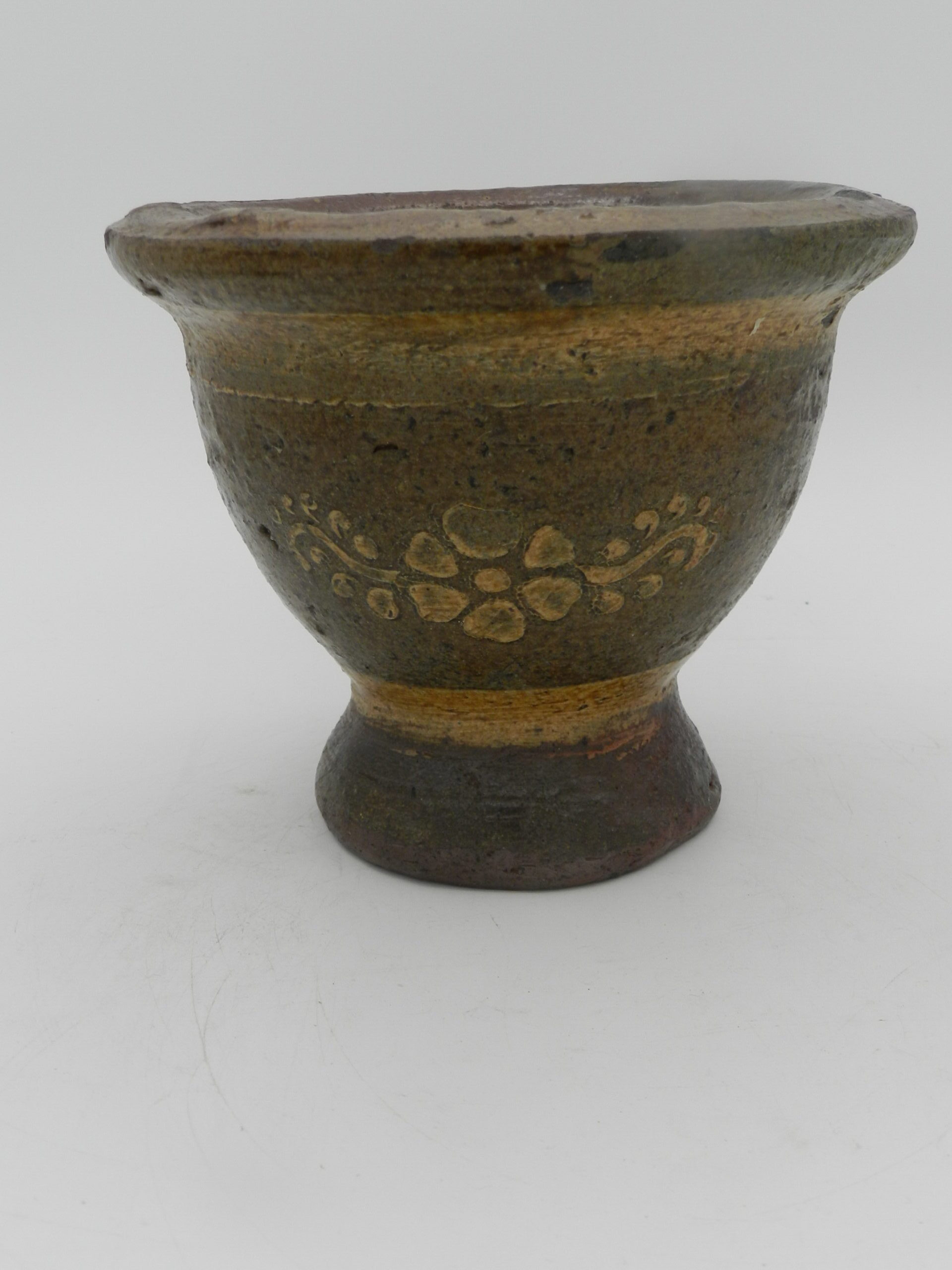
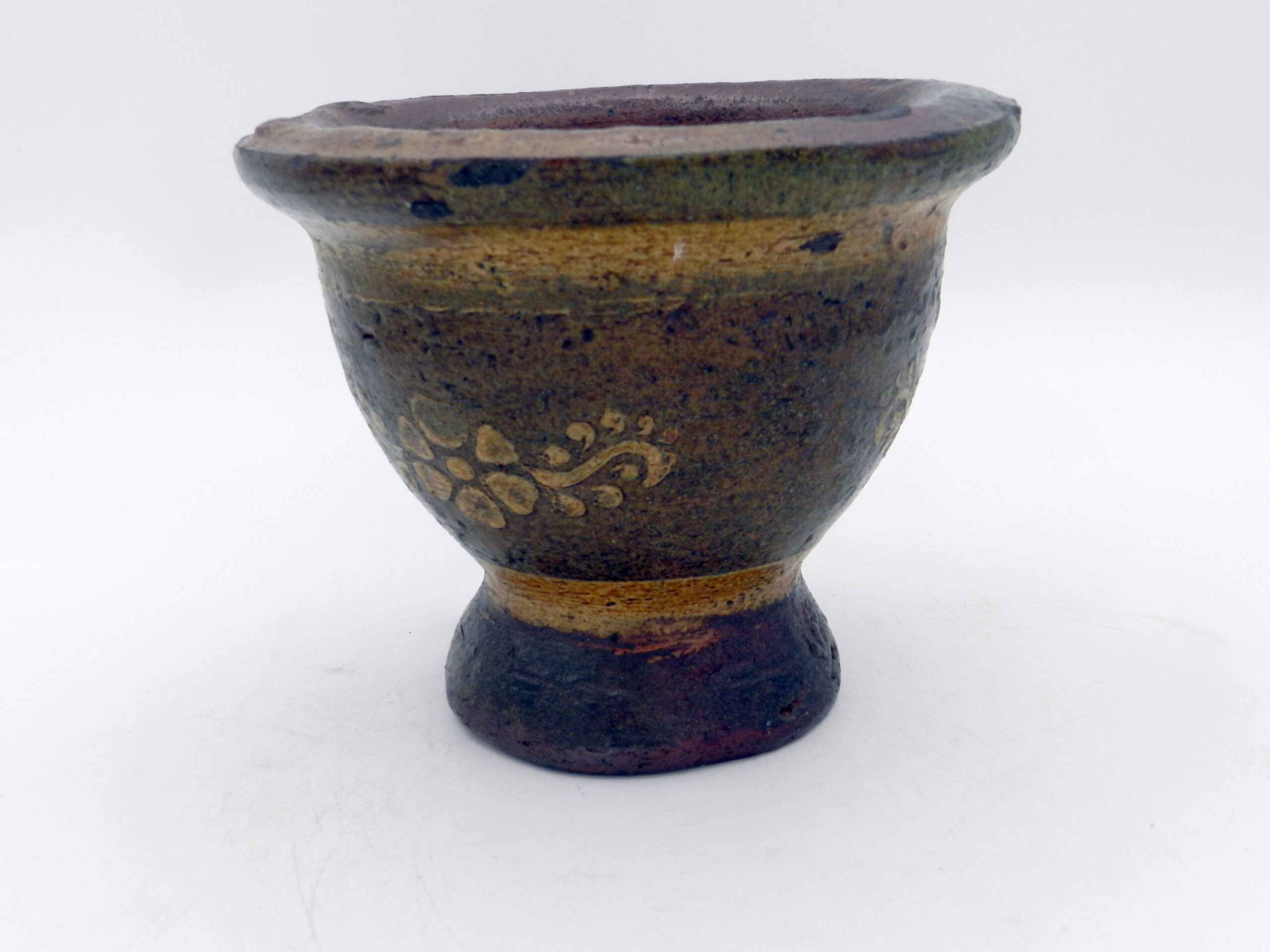
Purchased the afternoon before our wedding in 1981
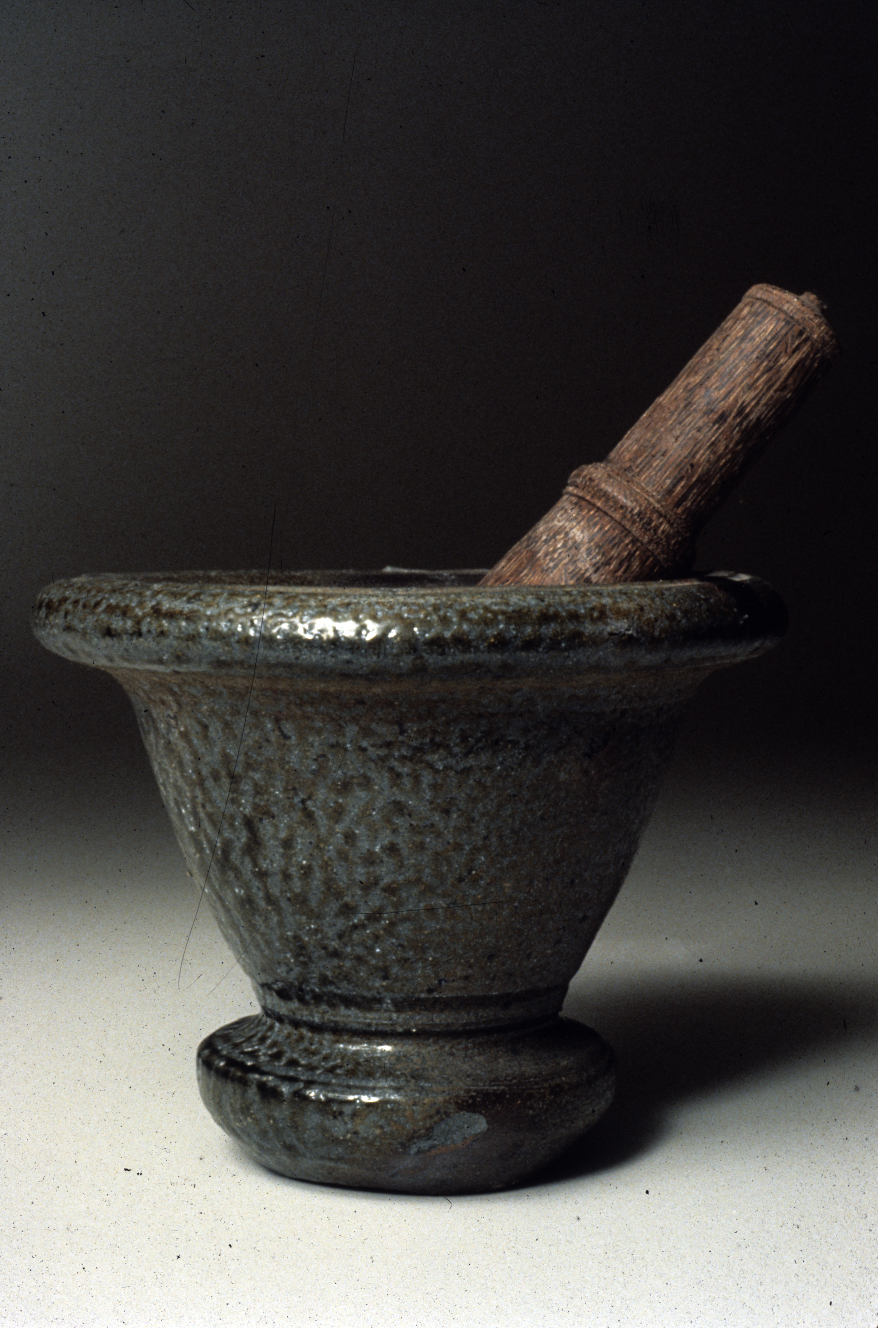
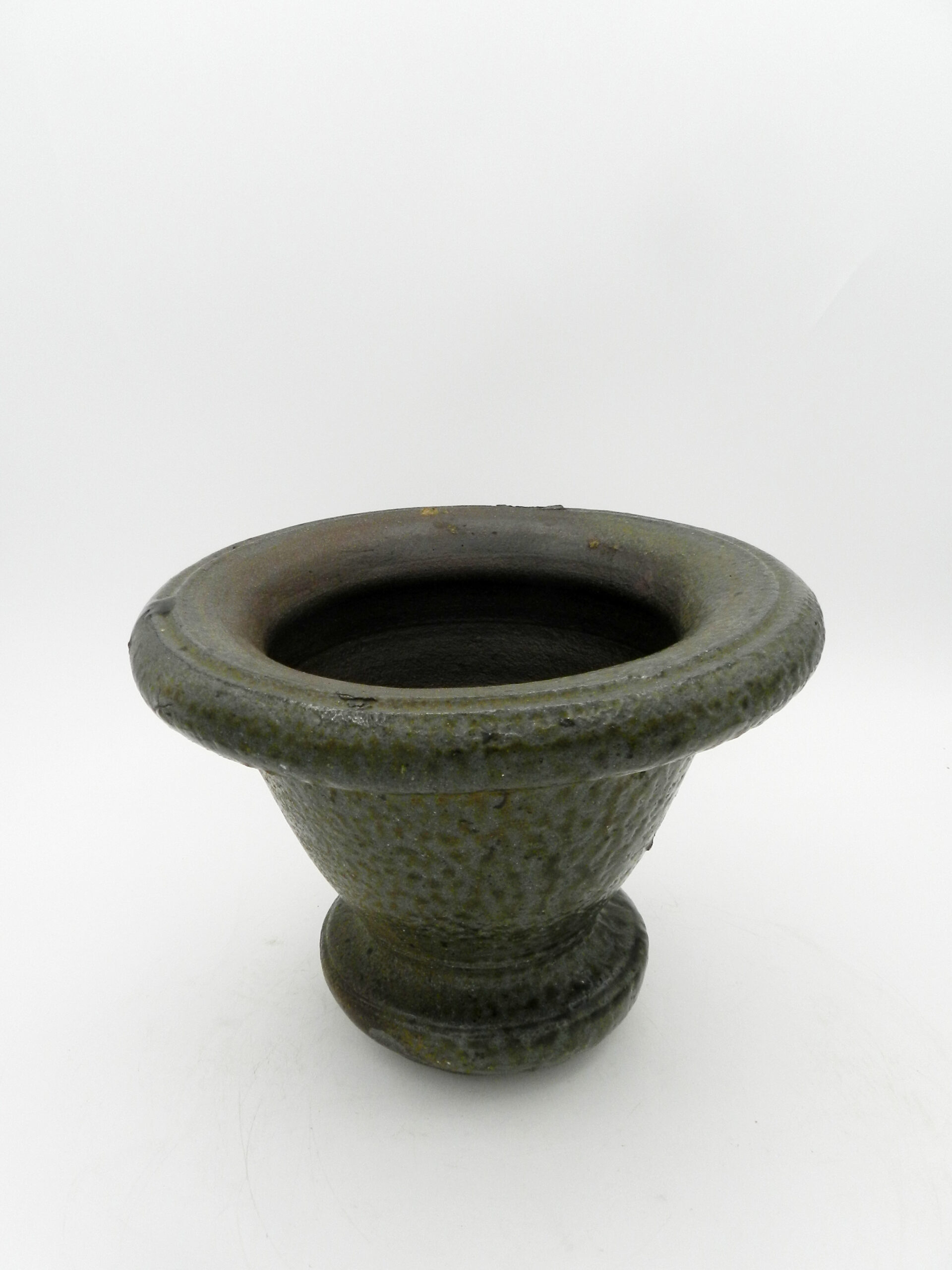
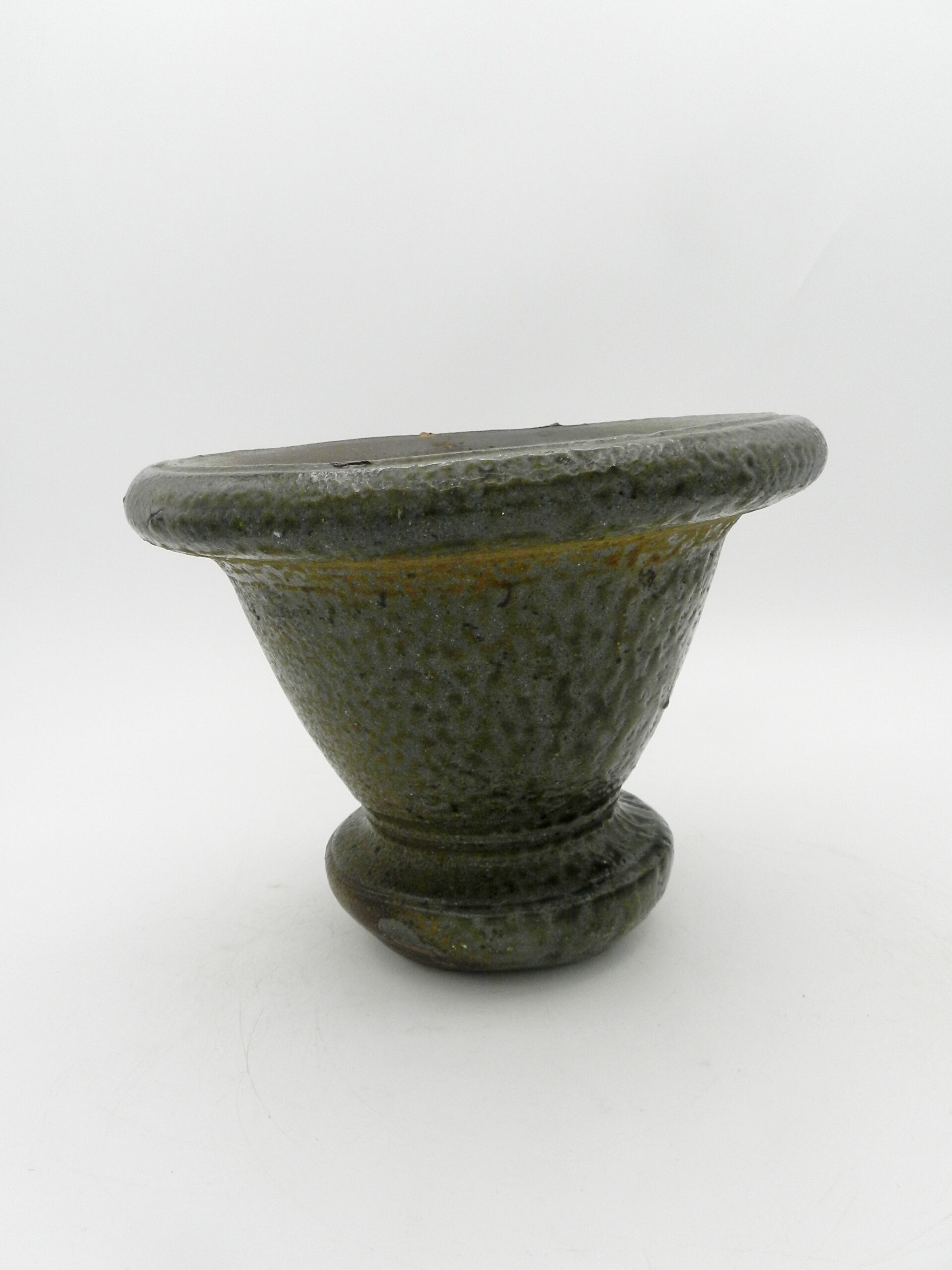
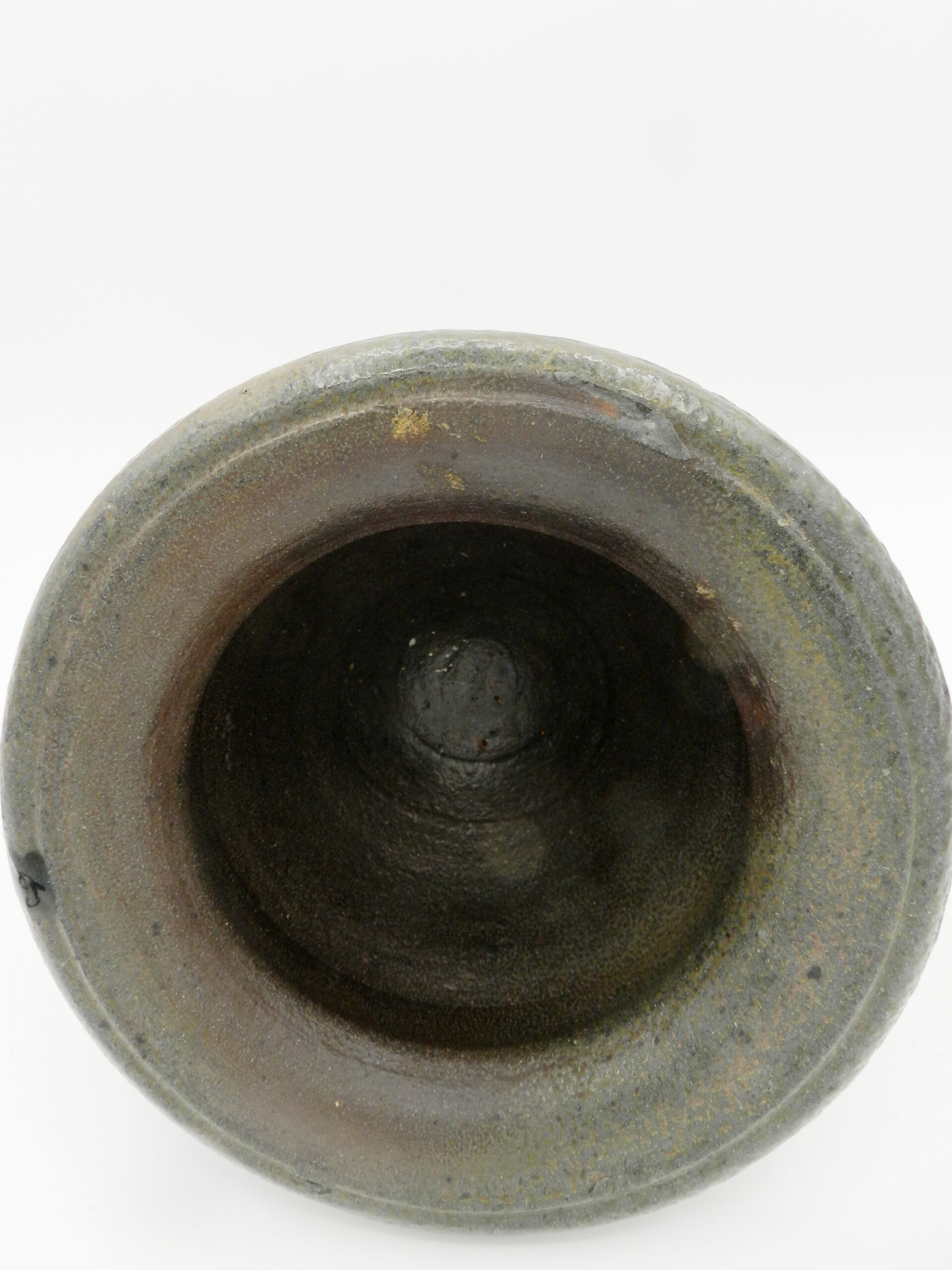
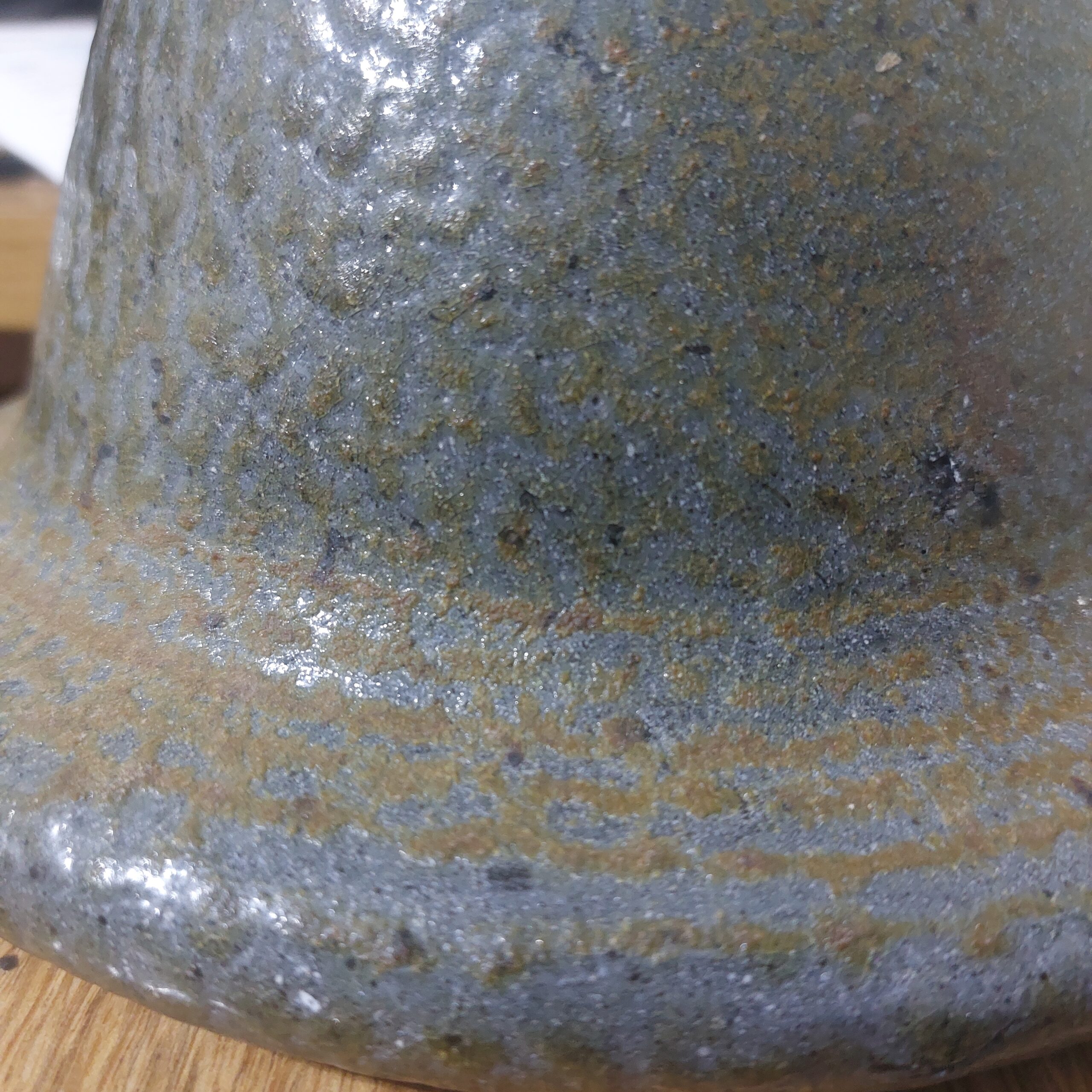
Purchased on the Isle of Kred, just north of Bangkok in 1989. Pestle is made of sugar palm. The apparent salt glaze is actually from volatilized alkali metal from the ash
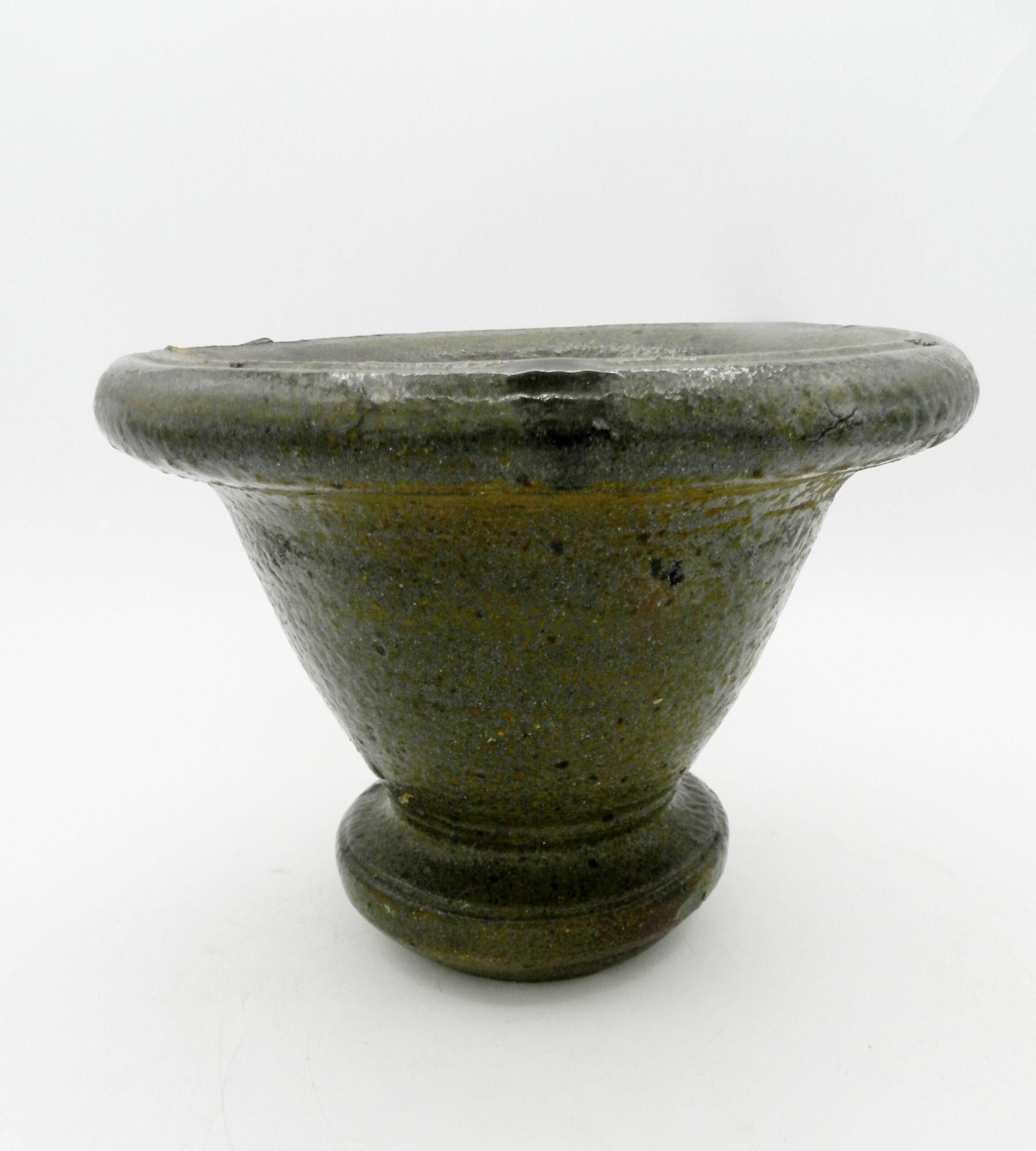
The large rim and prominent wide base are typical of mortars from Koh Kred.
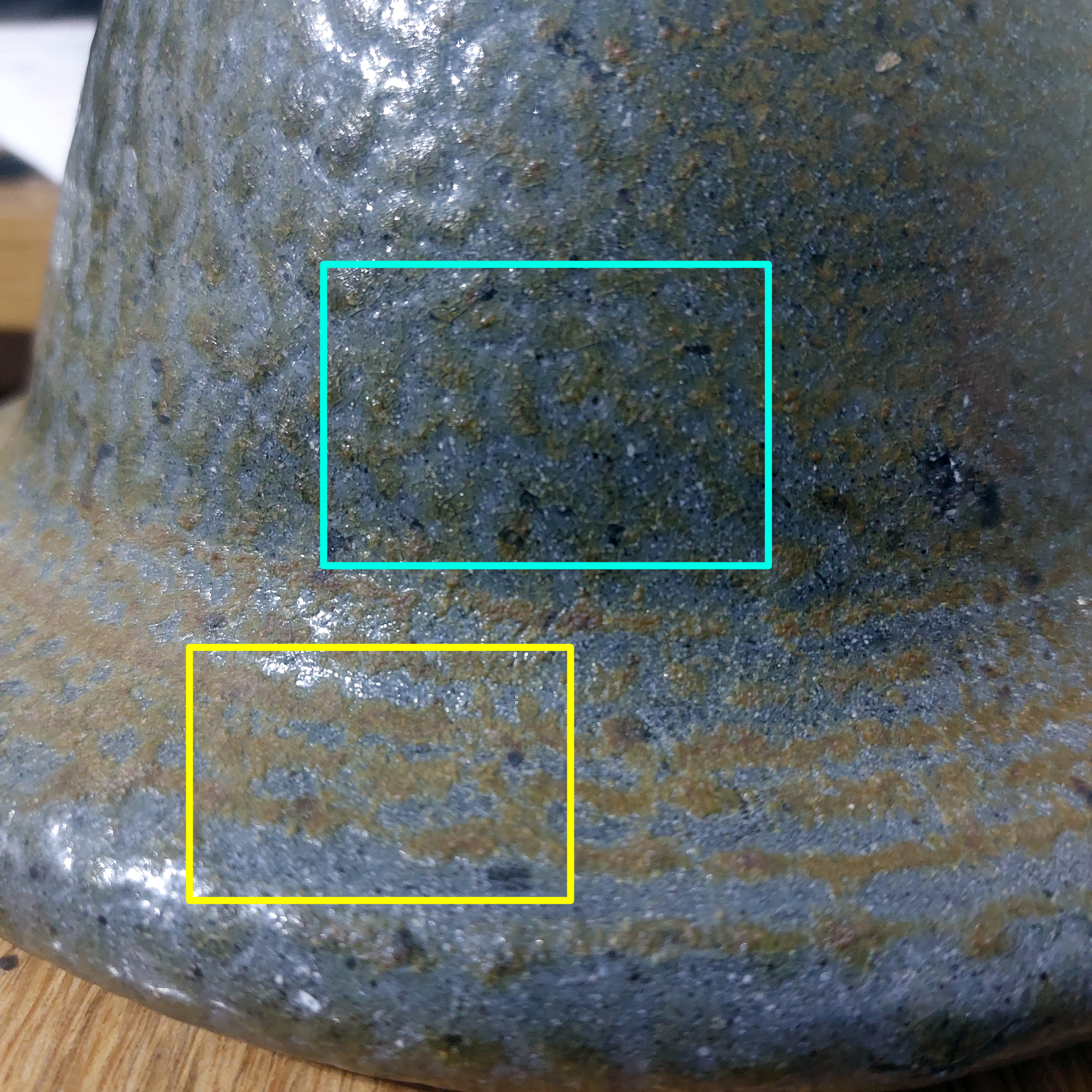
alkali metals and earth
The top blue square is glaze more dominated by alkali metals, the bottom yellow alkaline earths
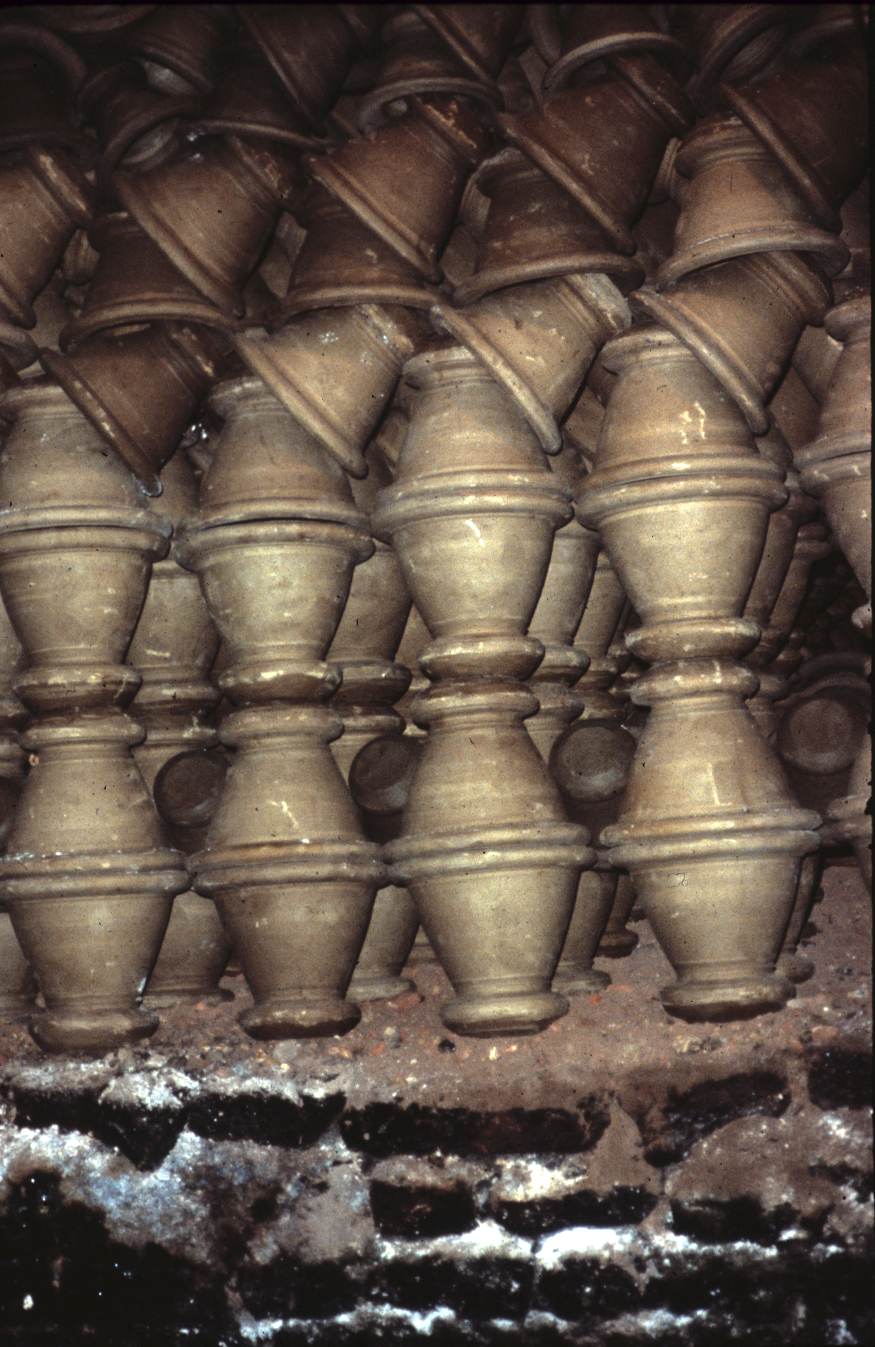
This is the stacking on Koh Kred shot from the firebox
An Ordinary Danwian Mortar 1989
Back then you could be sure it was from Dankwian because of the "decorative" lines around the rim. I assume that the function is that they could be for placement of a wire after the rim cracks. I never saw one repaired that way.
An Extraordinary Mortar 1989
This mortar had more wood ash than any other mortar we saw in 1989. I paid an extra 2 baht for it.
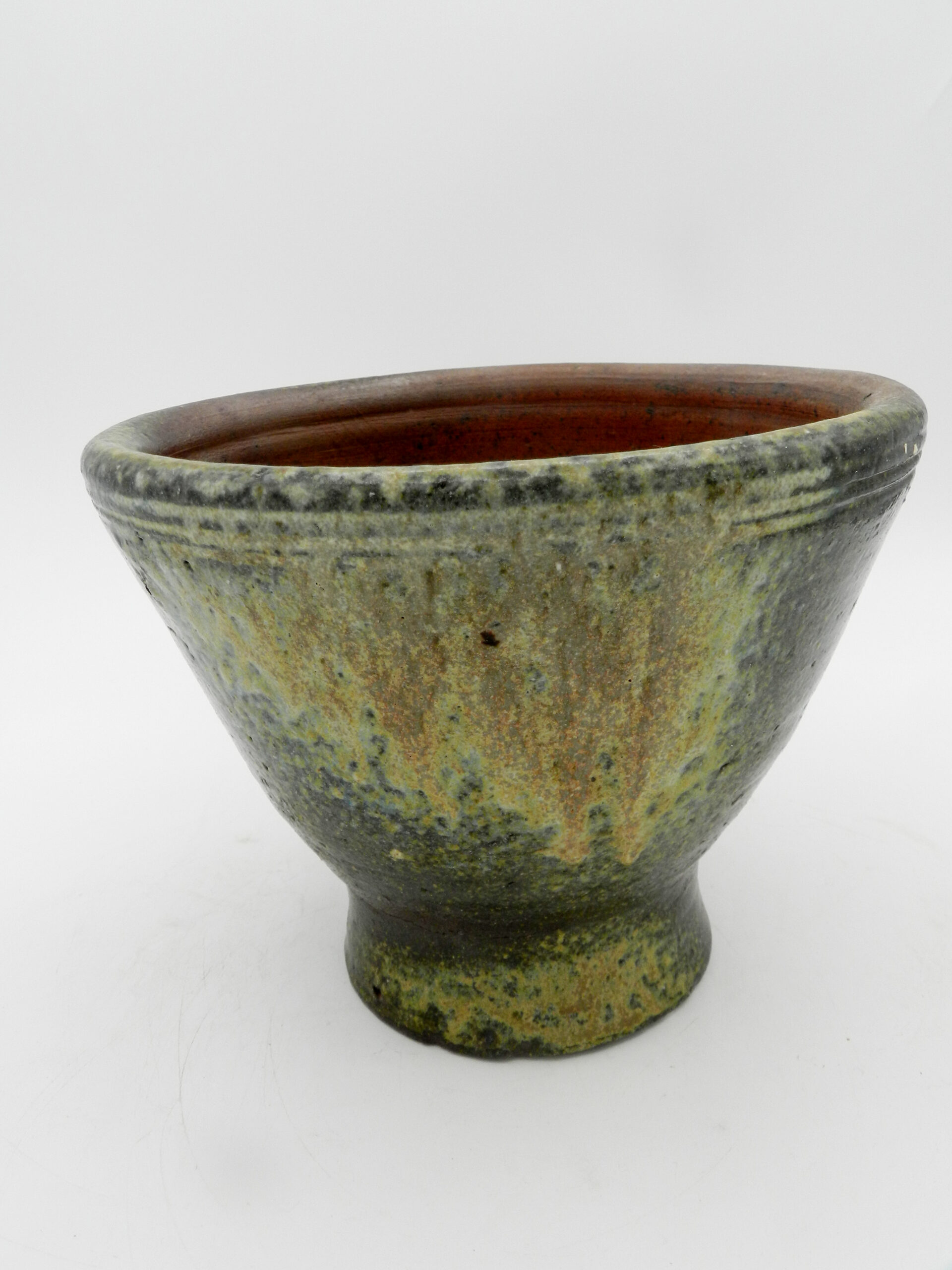
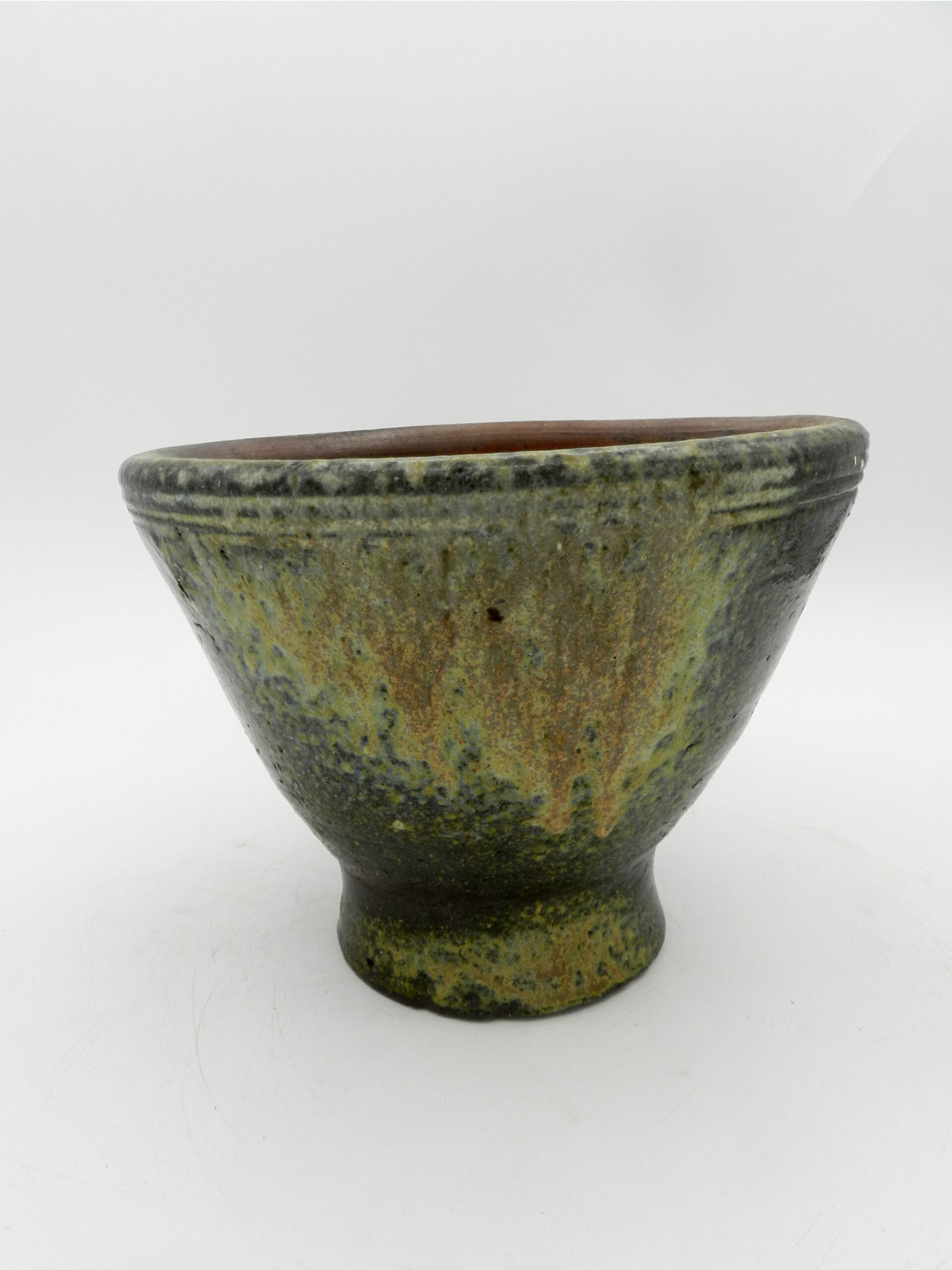
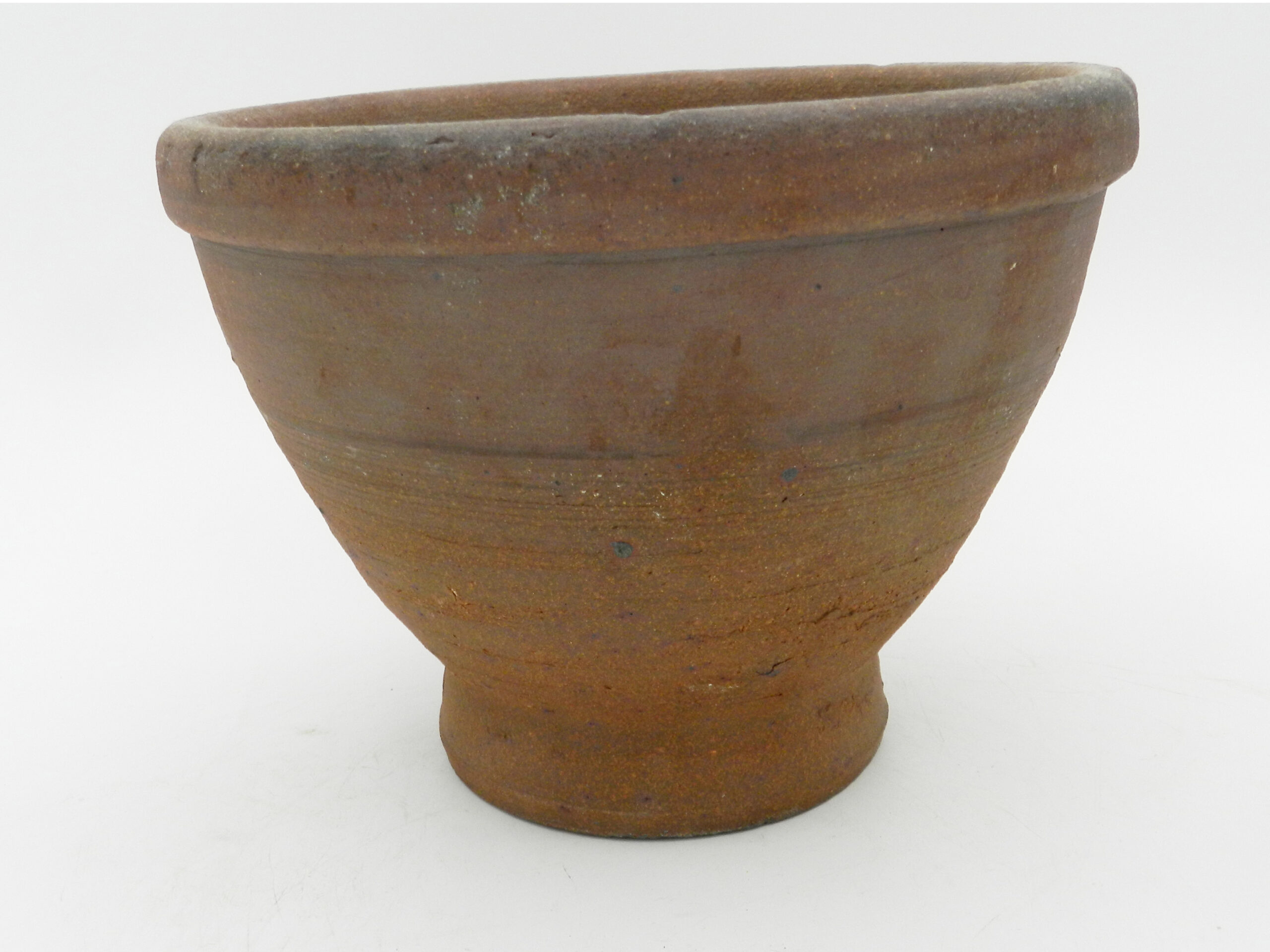
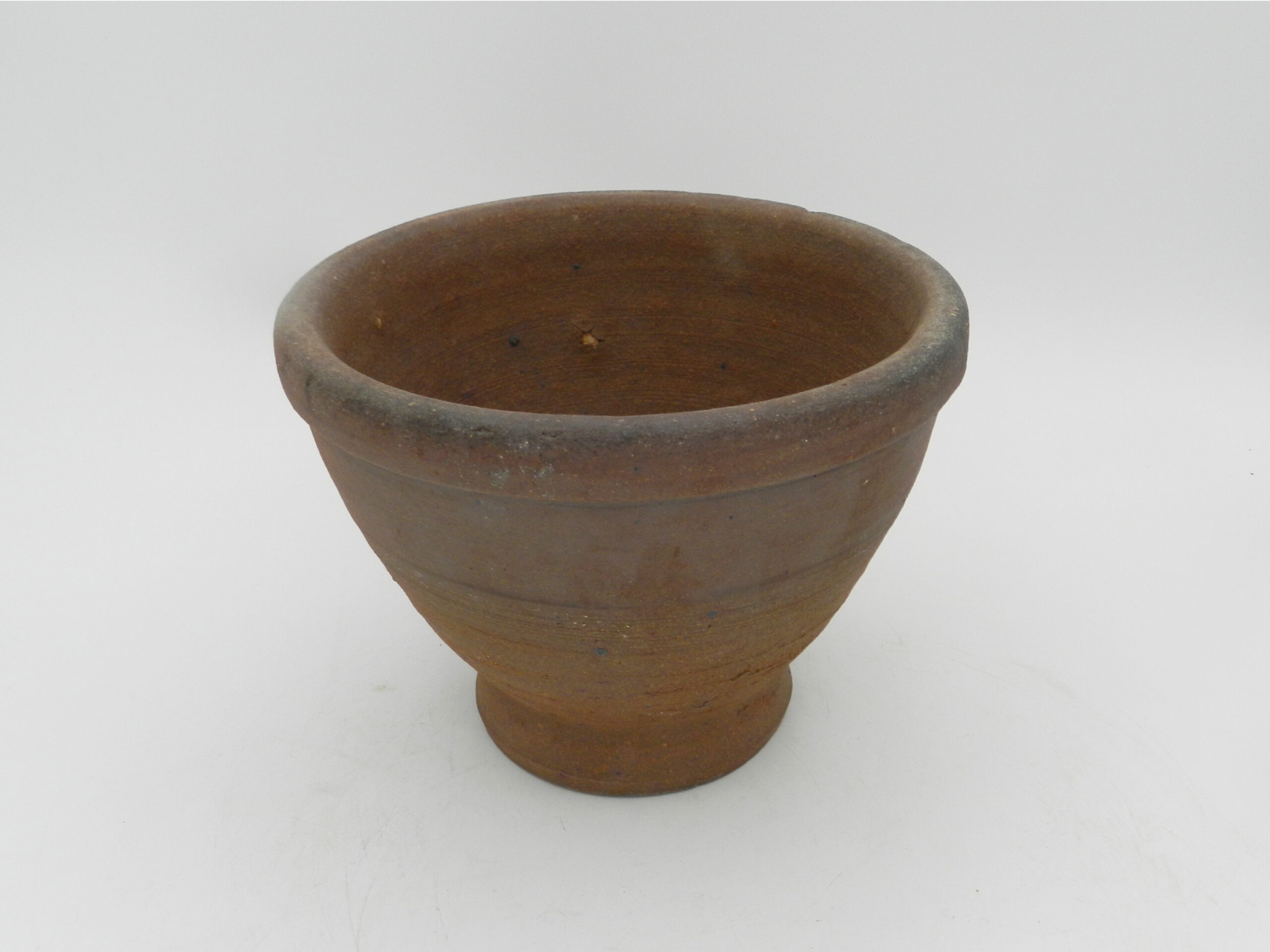
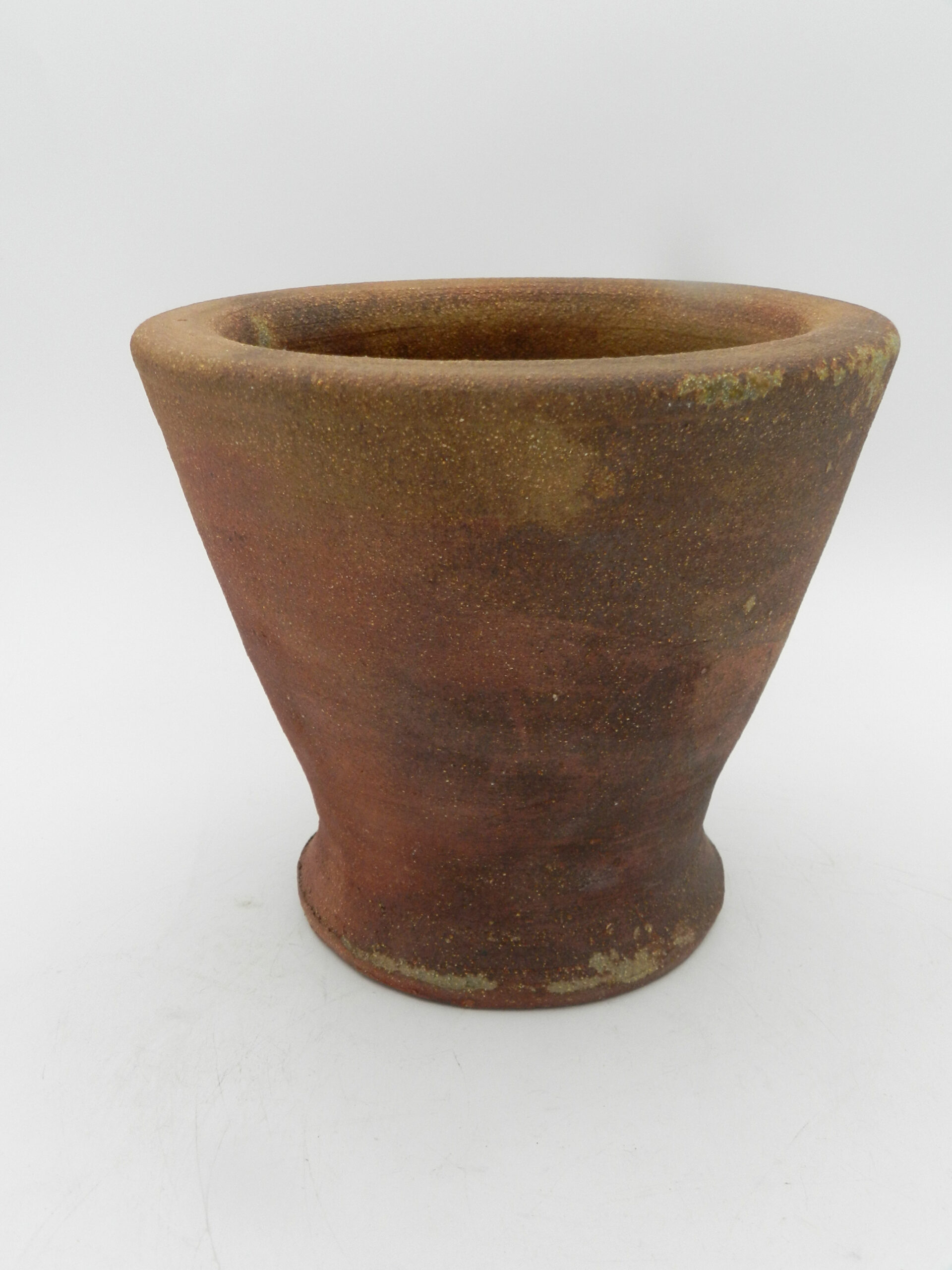
Wood fired stoneware 1989
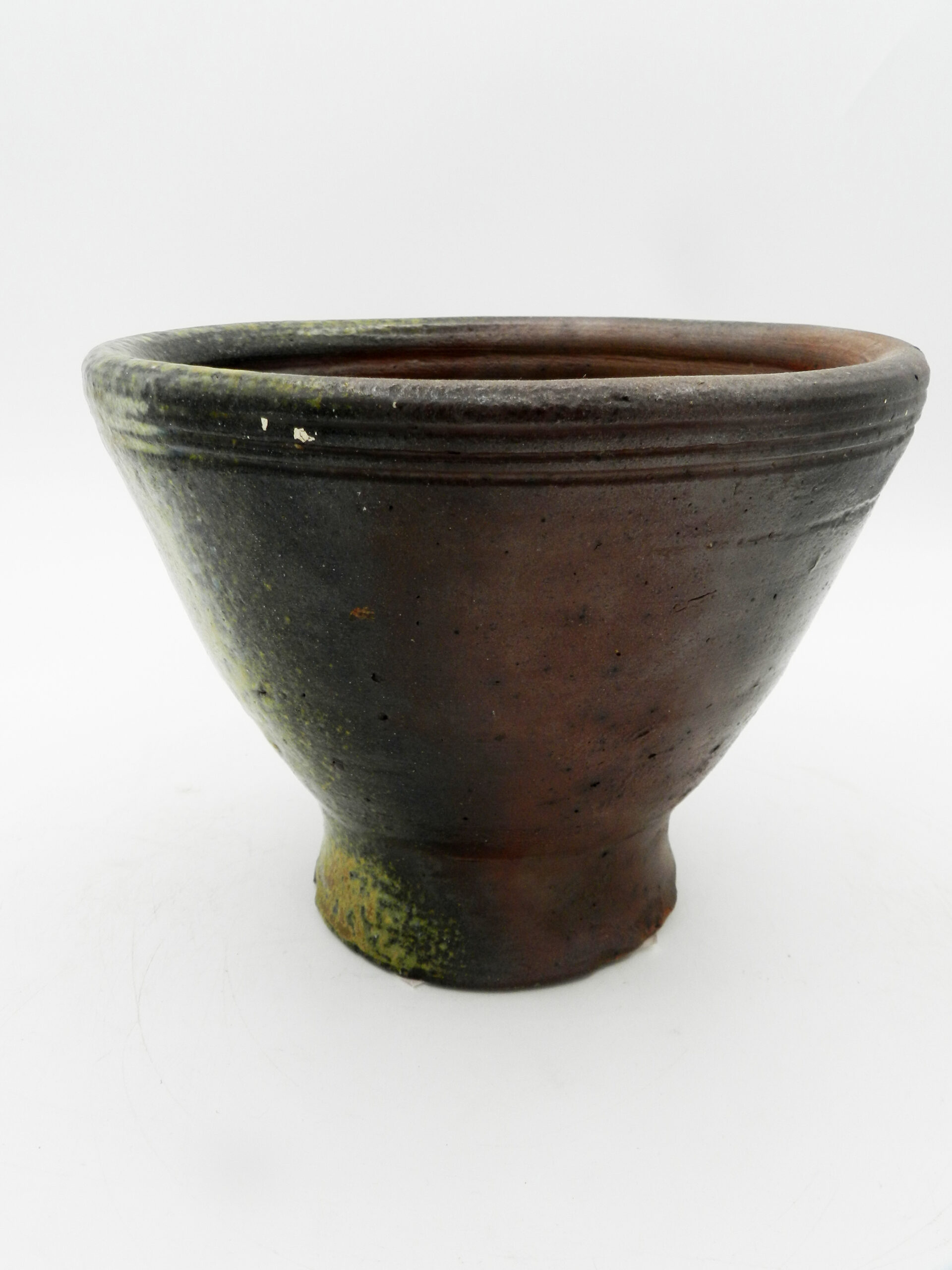
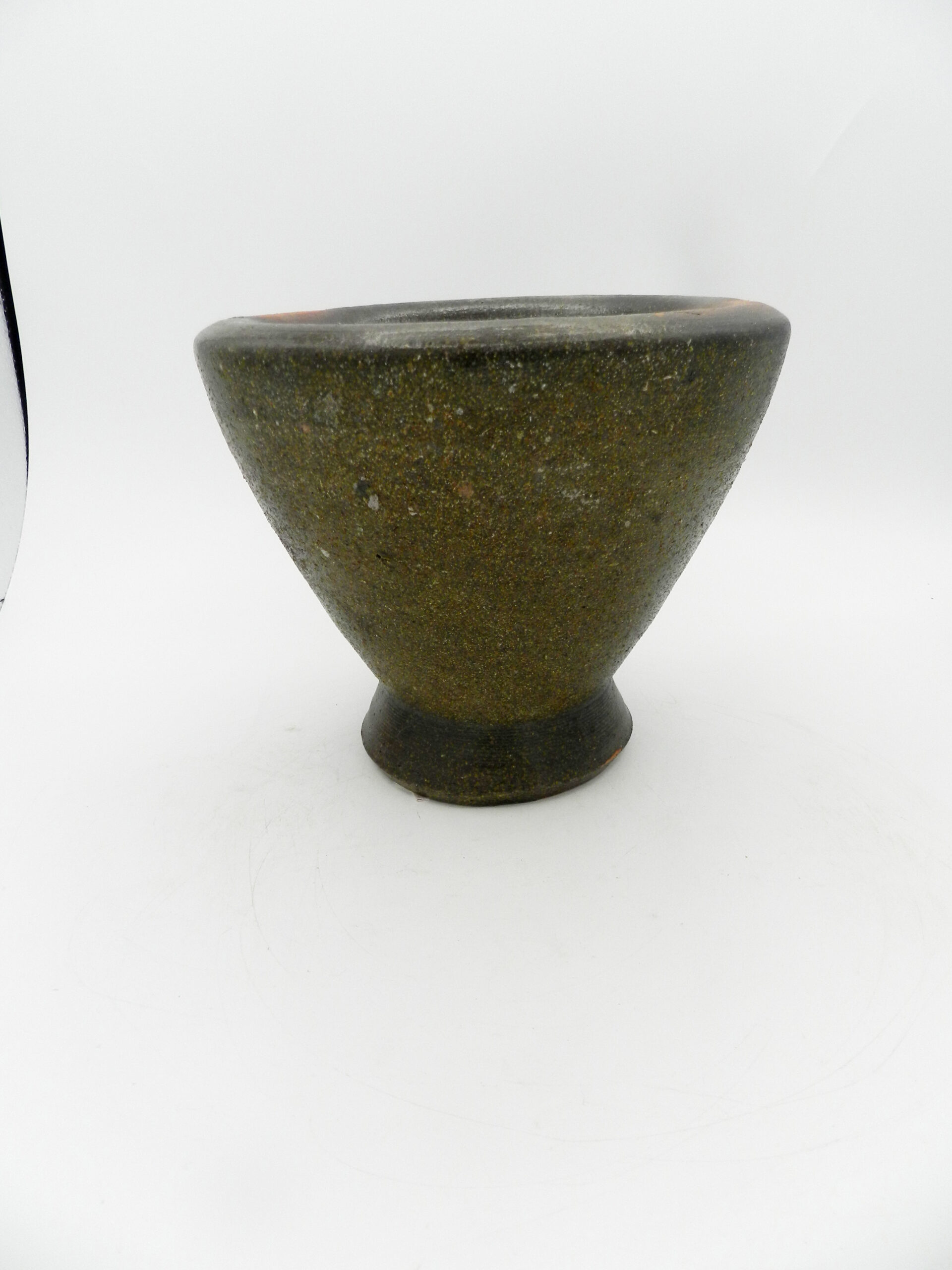
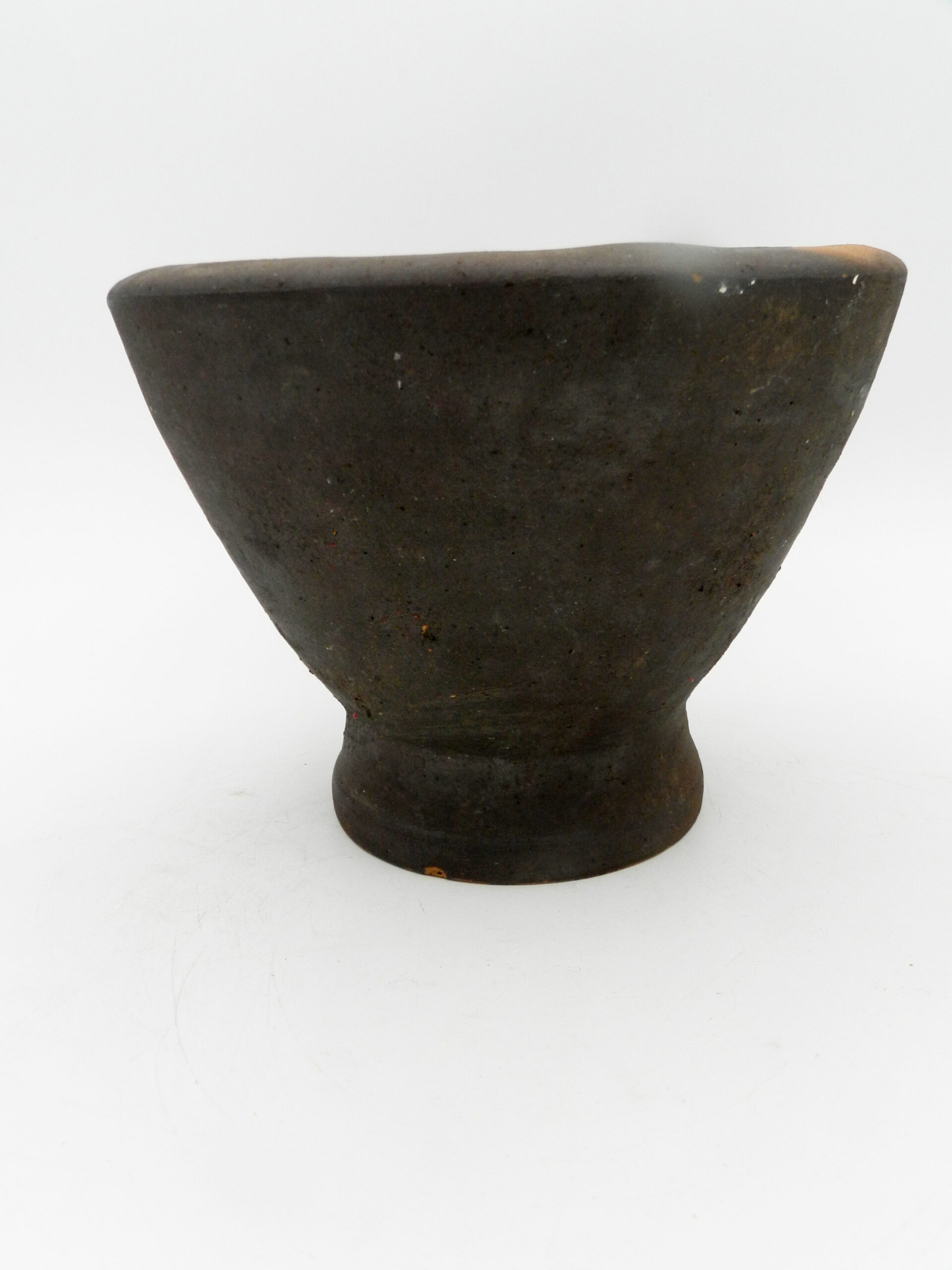
This mortar is from before the introduction of salt. This side has a coating of not fully melted woodash on it. The round rim was a clear sign of where it was from.
The round Ubon rim is easily seen. This is a salt glazed pot from the mid to late 1990s. It was purchased in South Texas USA Baan Tha Tao Hai บ้านท่าเตาไห
Baan Tha Tao Hai บ้านท่าเตาไห
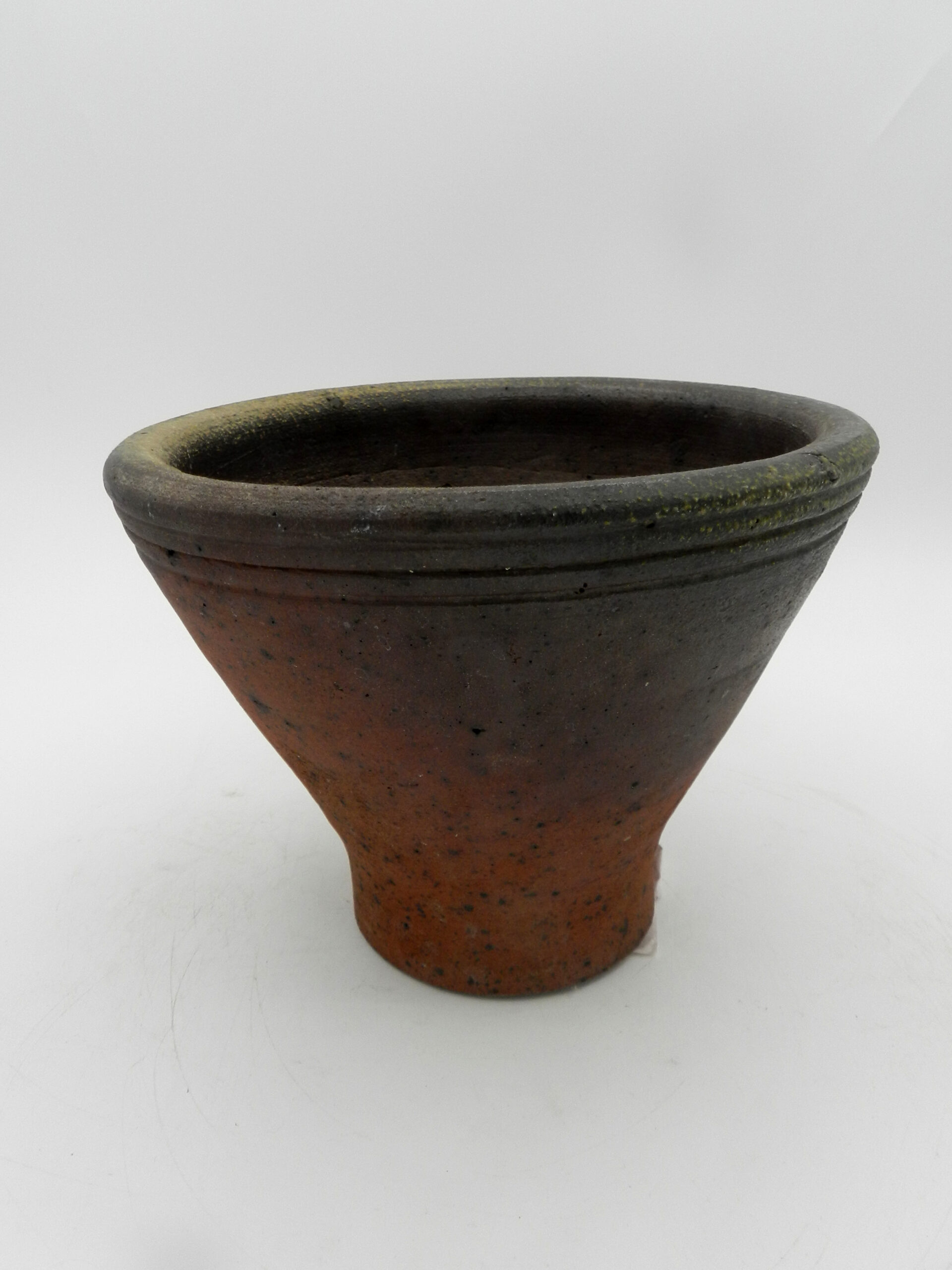
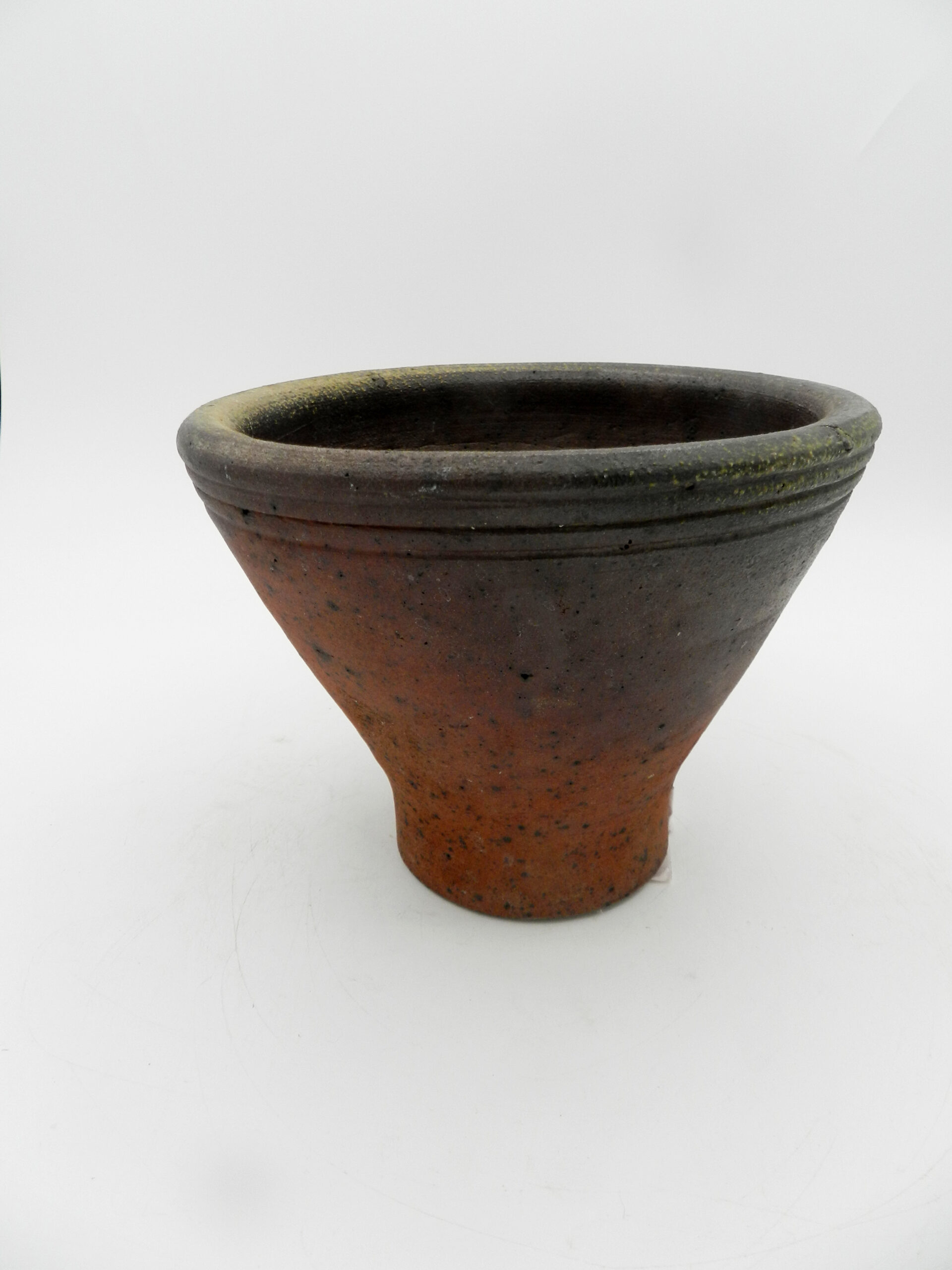
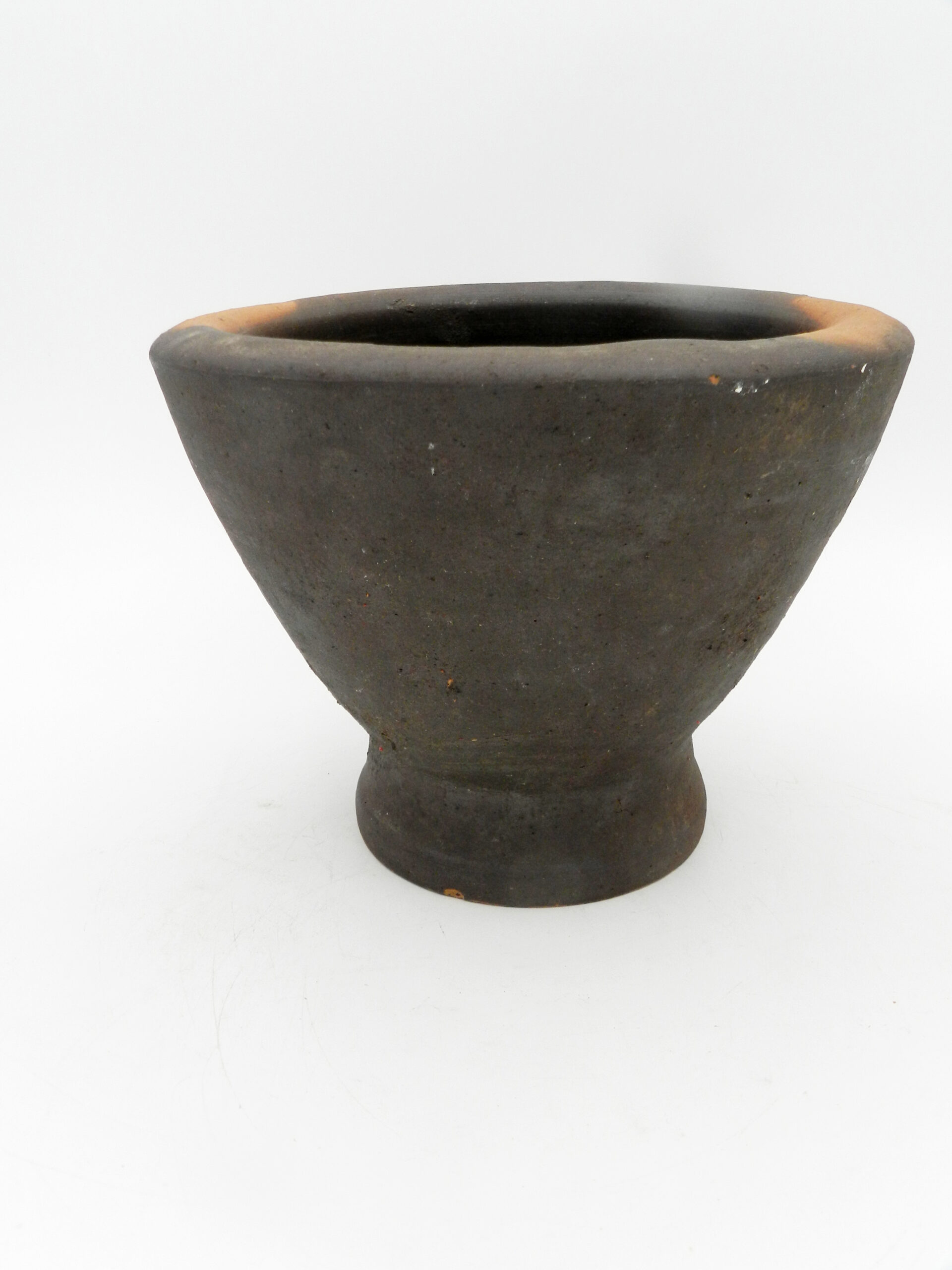
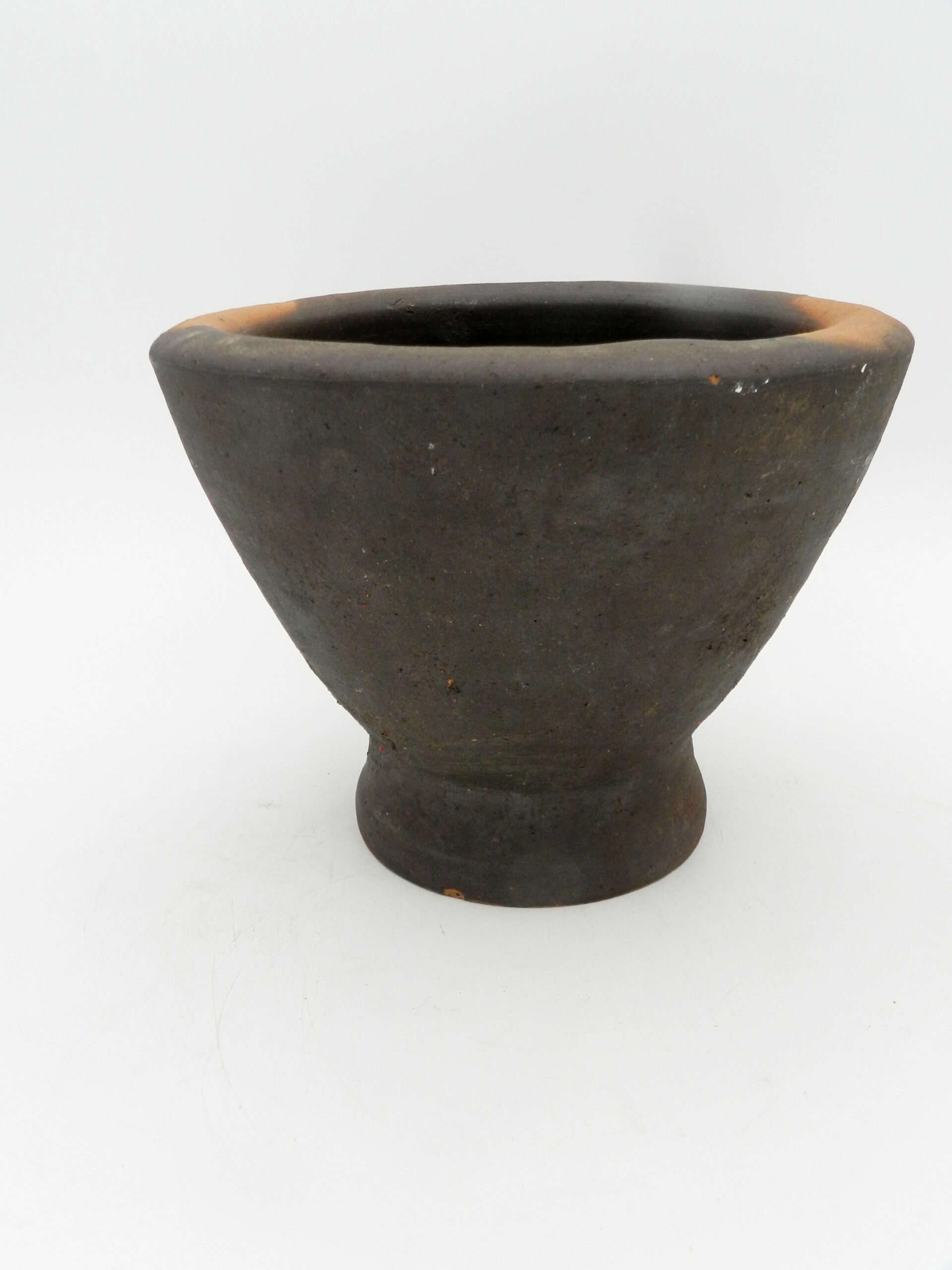
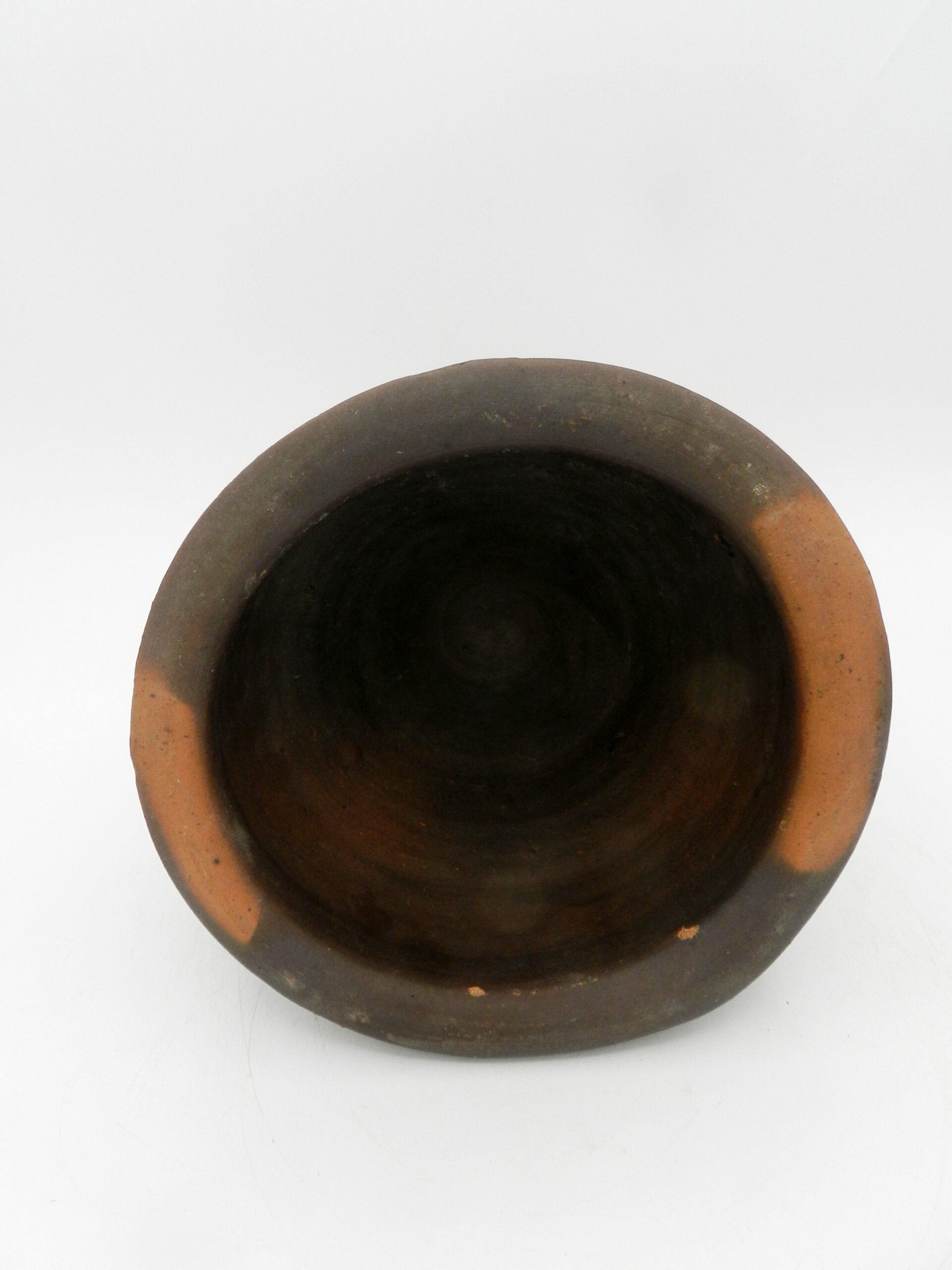
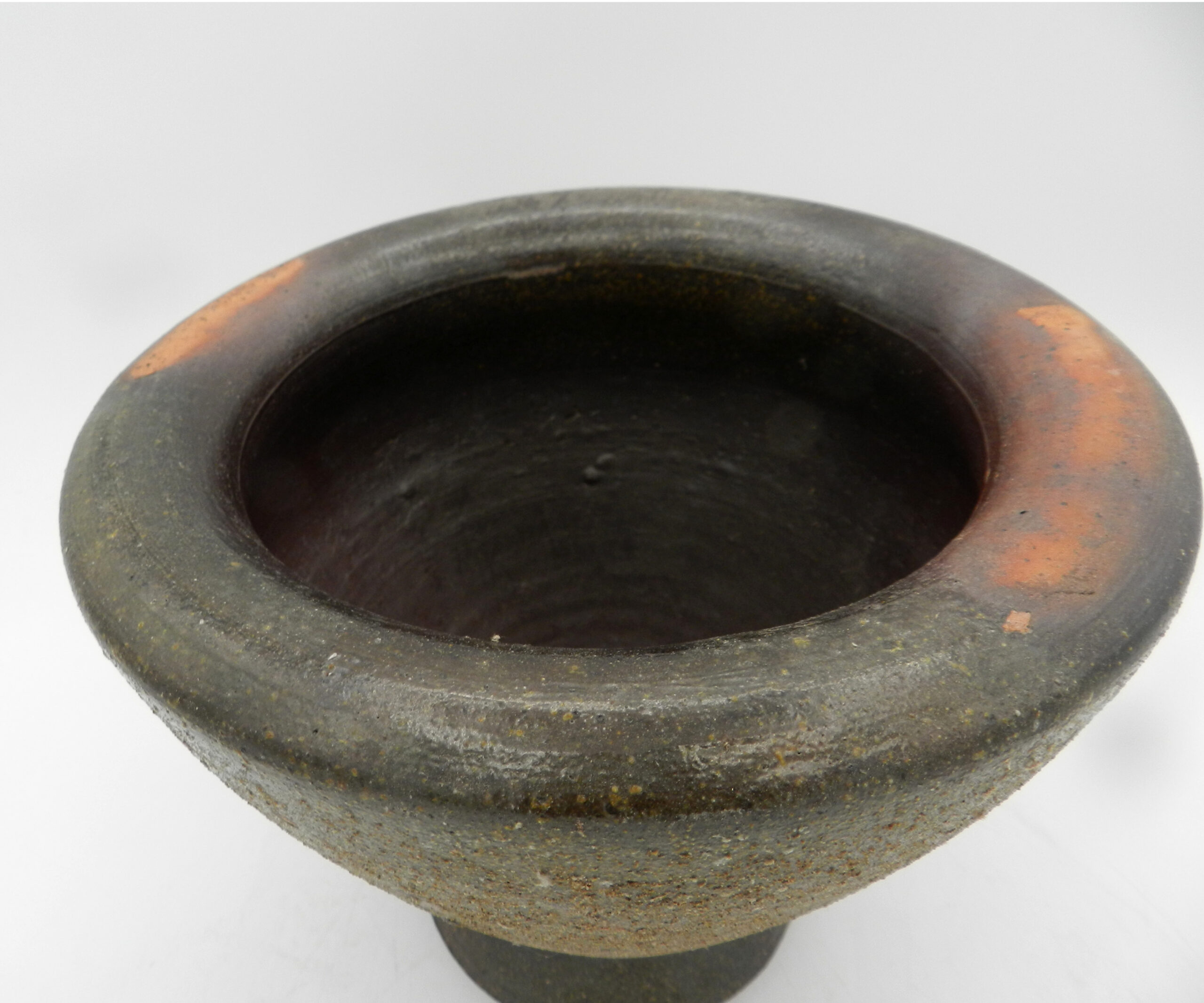
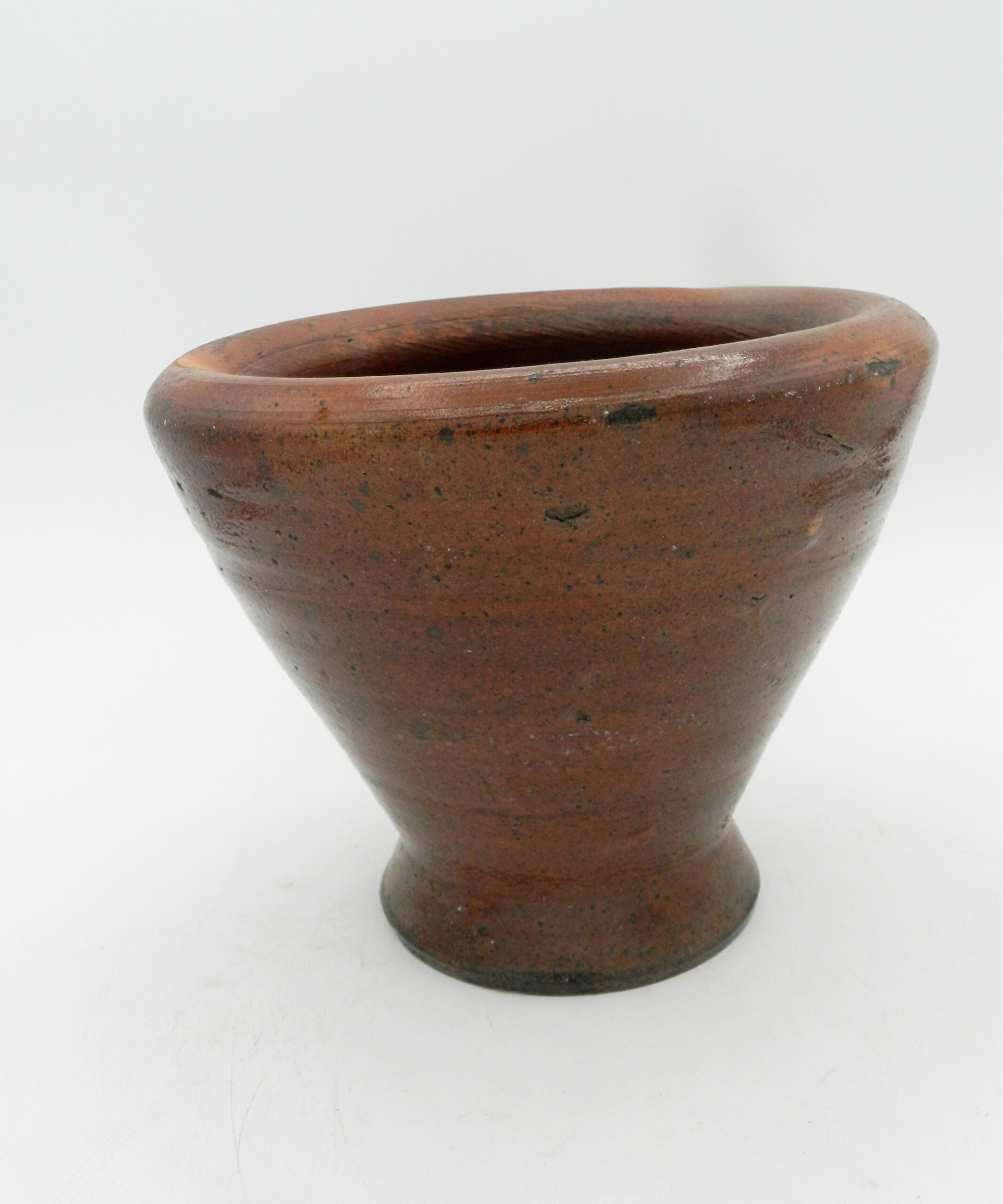
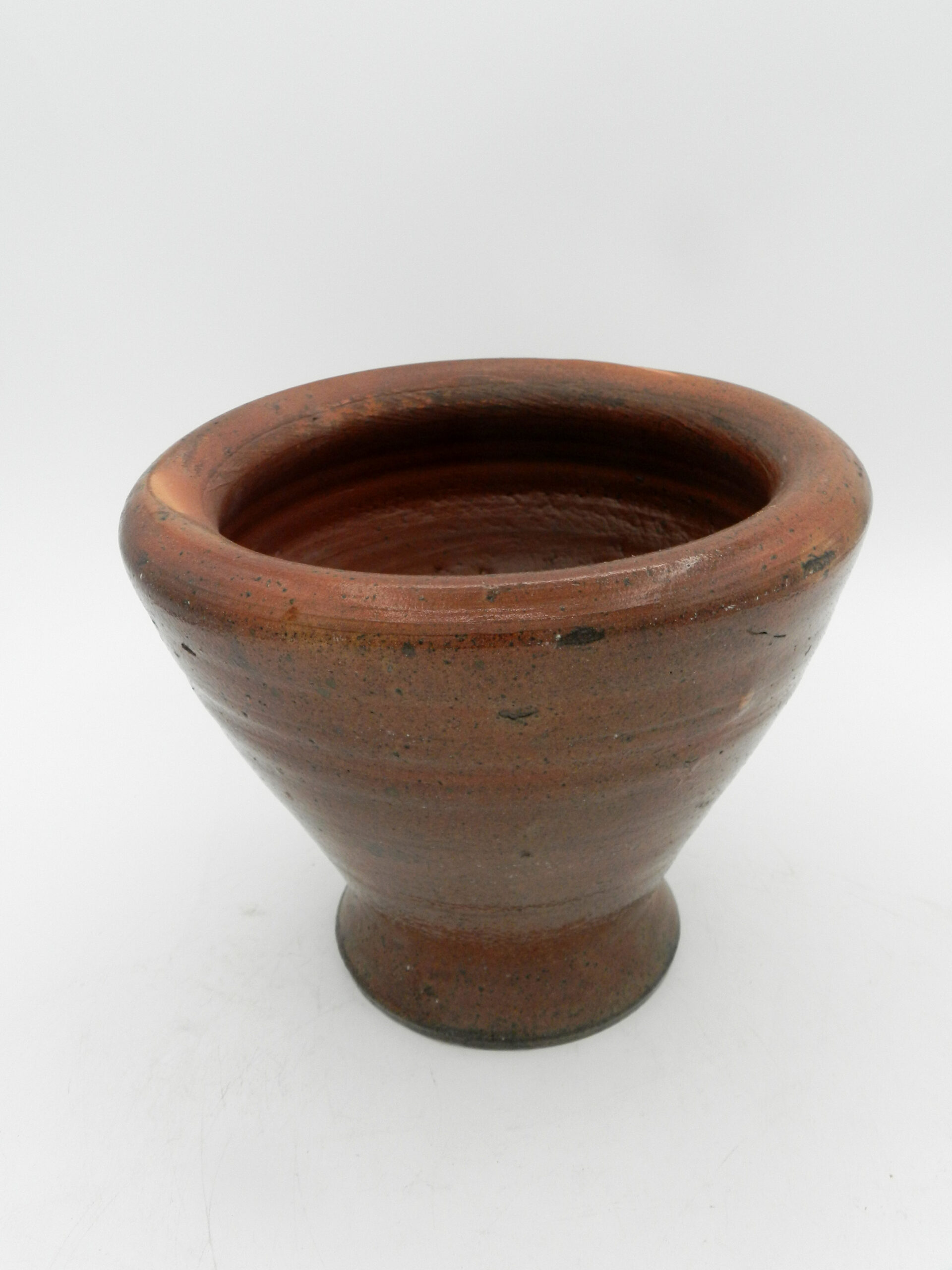
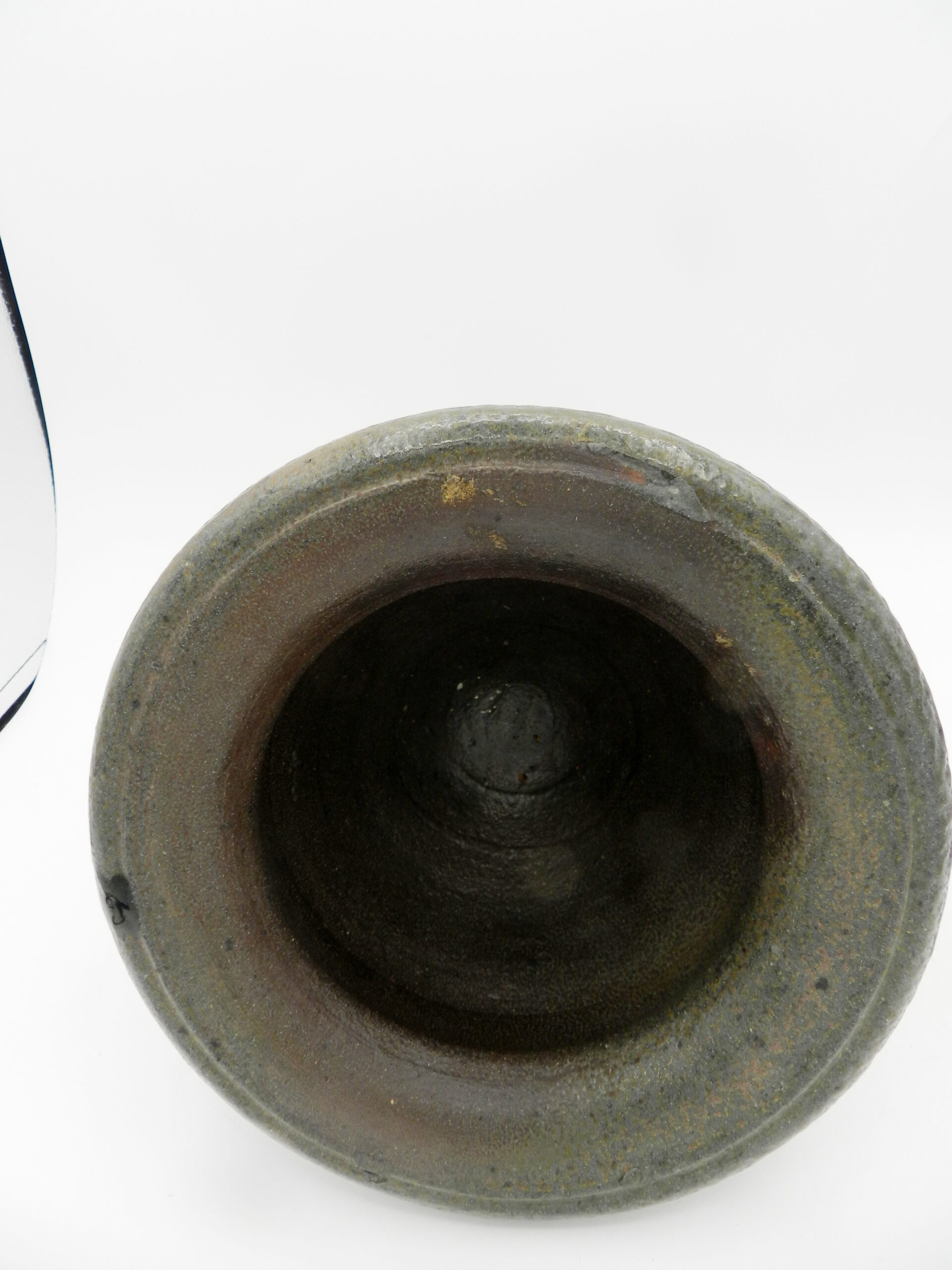
From before the introduction of soda. The brown coating is from the volitalization of alkali metals in the fuel.
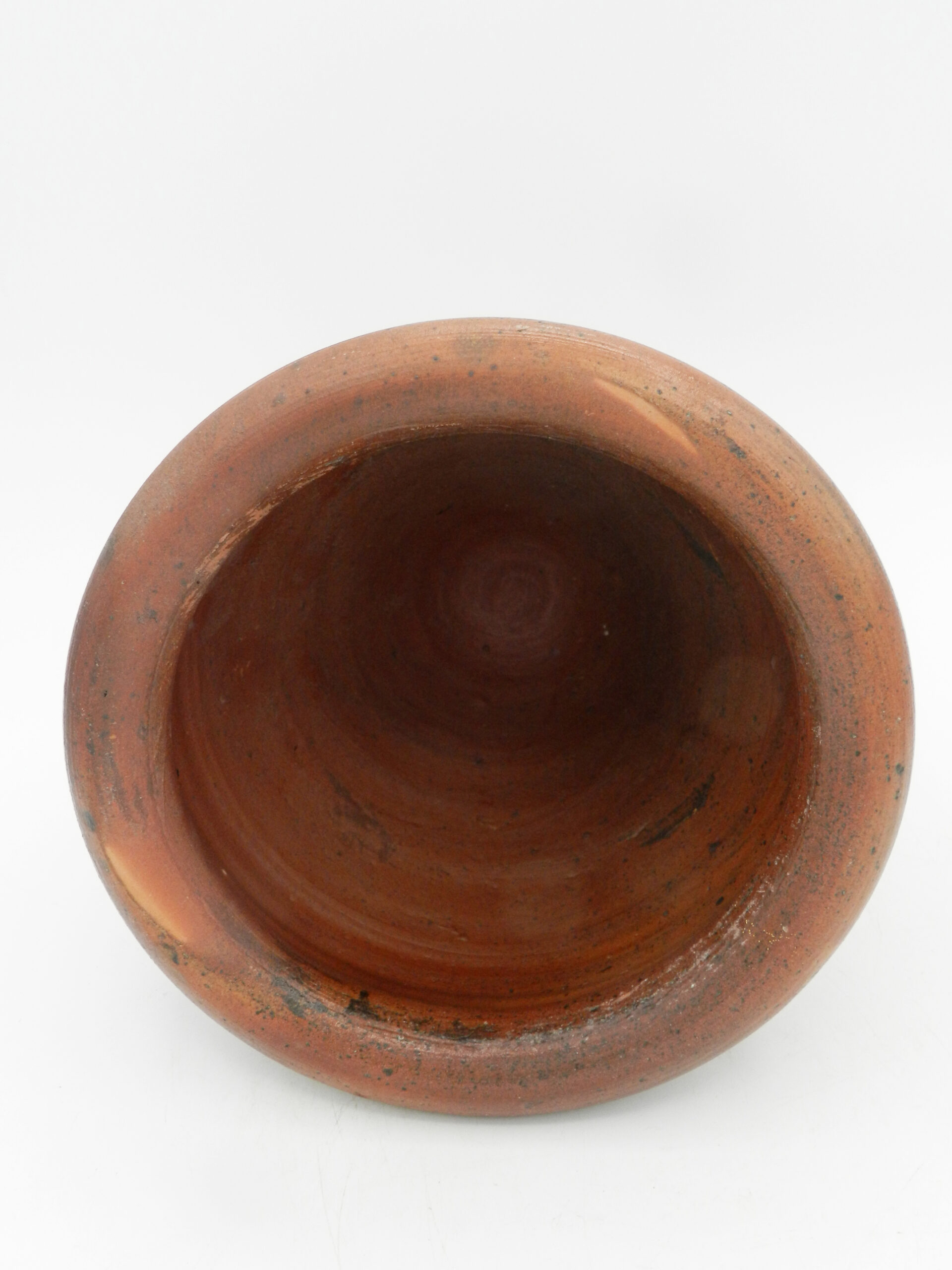
showing the rim
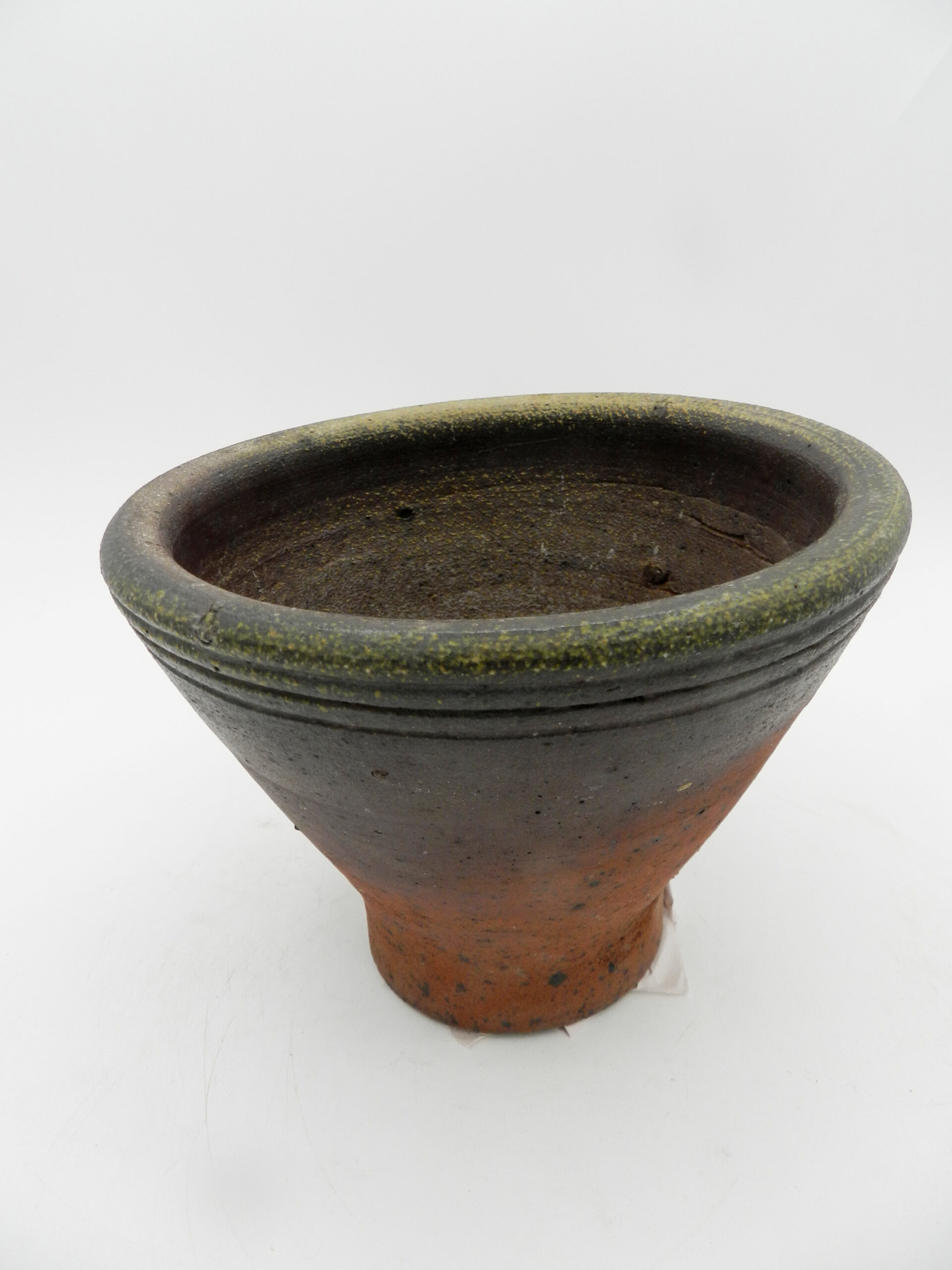
View of the rim. You can see the stacking marks where two mortars were stacked on top blocking out the volitalized alkali metals.
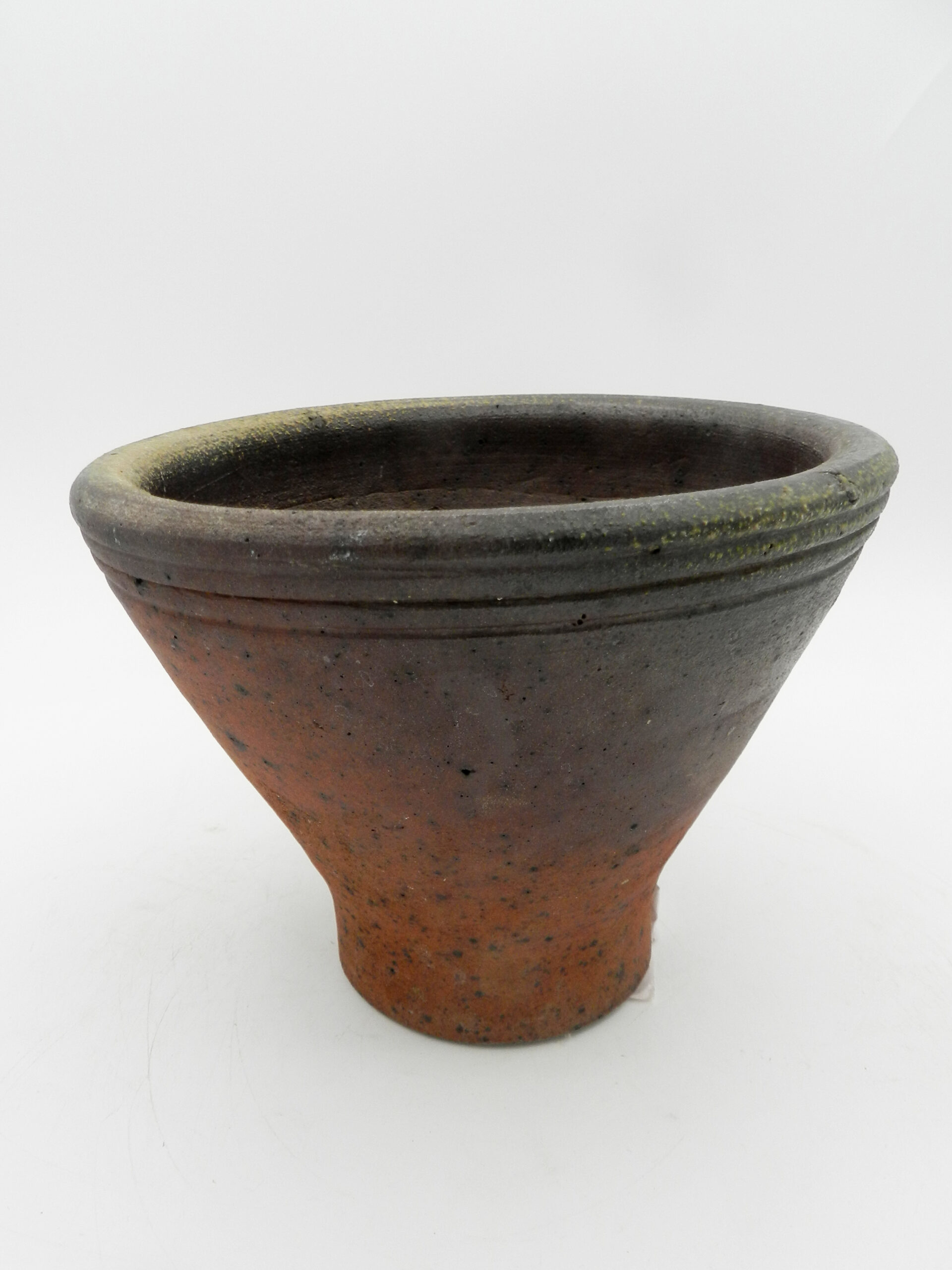
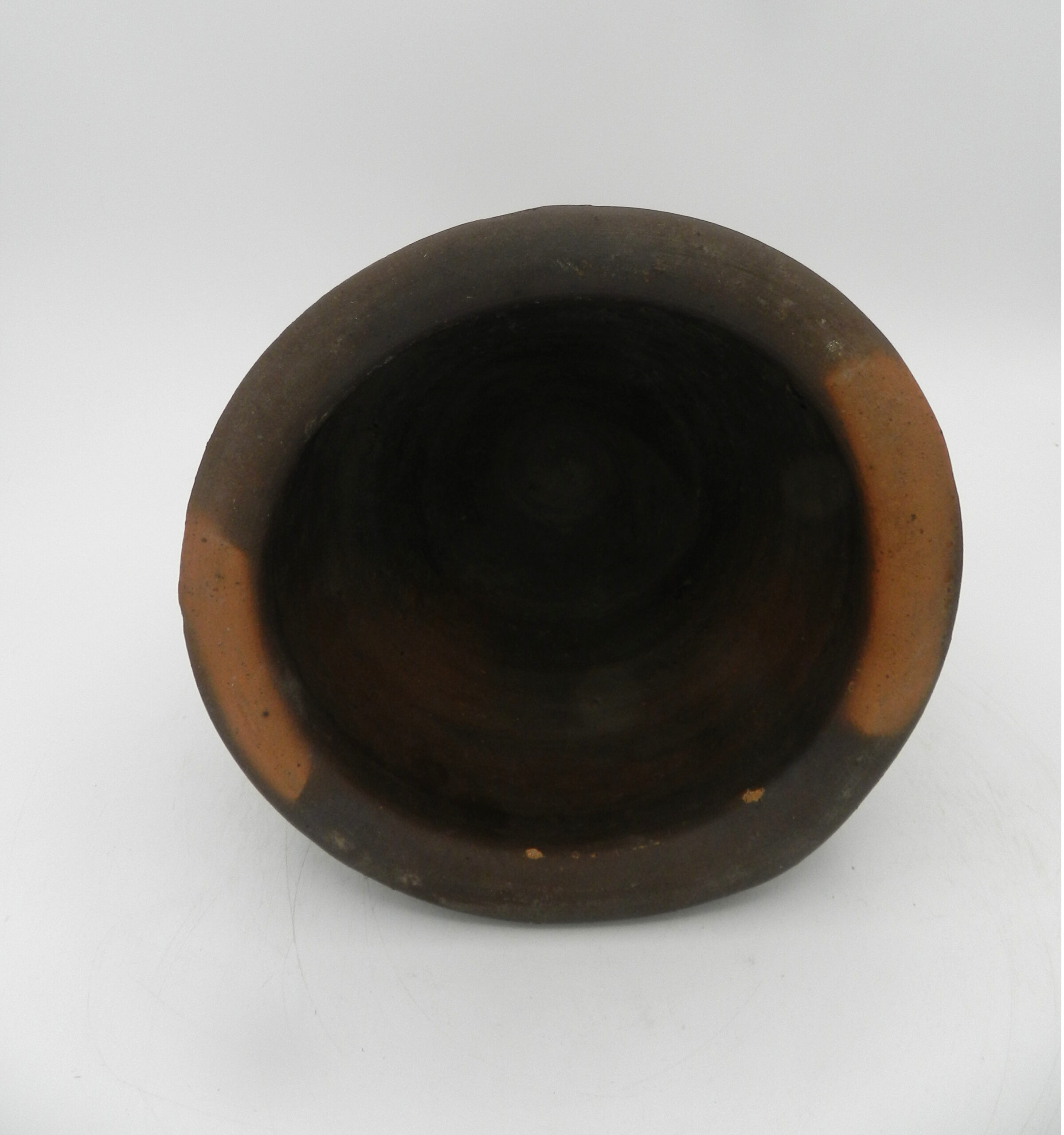
Salt glazed mortar from the 1990's. You can tell that the firing temperature was low from the orange color of the clay and lack or orange peel texture. Baan Tha Tao Hai บ้านท่าเตาไห Ubon
Baan Tha Tao Hai บ้านท่าเตาไห Ubon
This mortar was formed over a spinning mold. The symmetrical sponge marks are the easy way to differentiate these from Phon Bok mortars. The clay is similar although tends to be fired a bit lower I think. The rims are similar
Dear Louise,
On my trips to Thailand from 1988 until 2026 I often visited brick making companies. These varied in scale from single family brick makers to medium scale factories running several scove kilns.Mostly what I was were medium scale factories. In Nakorn Ratchasima they moved some. They had little infrastructure other than some open wall structures with metal roofs and sometimes some large cement vats the size of swimming pools.
Thai builders in general do not need the same thing from brick that we need in the United States. Brick are almost never used structurally. They are used as fill between reinforced concrete posts and beams on exterior walls. It also, for all intents and purposes, does not freeze in Thailand. This allows softer brick to be used that is fired lower, and is more porous. These brick have a lower tensile and compressive strength. They also require less fuel that denser brick.
Buildings in Thailand that use brick are generally stuccoed outside and often inside. Consequently the brick can be relatively crude.Per cubic foot installed they are cheaper than concrete or there would be no demand.
The brick are fired in scoves, loose stacks of brick with space for fuel between the brick. The first few layers on the ground are made of already fired brick, and an outside wall of fired brick is stacked around the raw brick being fired. In Thailand the fuel used is rice husks. They are agricultural waste. The compost very slowly and are low in nutrients. The burnt husks are almost 100% silica. Because of their composition and low soluble salt content they make an excellend addition to the clay as temper or grog. The temper reduces shrinkage and the resulting cracking and make the raw brick more porous. The porousity allows the brick to dry faster and because the pores allow steam to escape before pressure can build much, allows the brick to fired faster. It also gets rid of the ash. The ash is generally not burnt white and has some residual carbon. This adds a small amount of fuel to the fire. I suspect that it is not significant.
The clay mixing operations does vary some, but mostly what I have seen is a vat, really better described as a cement swimming pool filled with alternating layers of clay and ash that has water added as it is filled. After slaking and aging it is dug out and but into a brick extruding pug mill.
It was truly amazing for me to see working scove kilns in both the brick factories and the stove factories. I had always bee interested in scove kilns and about 5 years before going to Thailand I built a scove brick kiln. I was in graduate school and built this small kiln on a cart with wheels and rolled it into the galler for an exhibition.
Over the years I have visited a few charcoal burning kitchen stove factories. These are small things that you can set one pot on. They burn charcoal. In 1988 a large proportion of kitchens still used them. Even in 2026 a kitchen with a gas stove needing an extra “burner” might throw something on the charcoal stove. They are still used for several types of grilling หมูกระทะ is one. Its been called Korean Barbeque at times. There are restaurants that specialize in it and sometimes places that deliver burning stoves with all the fixings to your residence.
The factories have all employed over 10 people with many performing specialized jobs. I have seen two styles made, the USAID design built on an internal mold, and the standard design built inside an external mold. In Korat they used the external mold. The internal mold is used in Khon Kaen. There are likely factories in most populous provinces.
The clay is a local orange clay and it is highly tempered with partially burnt rice hull ash. The rice hulls are used as fuel for the firing so there is ample supply and the carbonized but not fully burnt ash that gets included in the body just adds a bit of fuel to stack and burns out leaving voids, slowing the progression of thermal shock induced cracks.
The clay is slaked and then mixed and dried with rice hull ash. The mix is slightly thixotropic. This is also true of Baan Maaw clay and I attribute it to potassium salts in the rice hull ash. Although small percentage wise it does not take much to change rheology of clay and water mixes. The mixers were built with surplus motor vehicle motors and transmissions using old differentials from truck and car rear axles. The mixers in these factories are vertical mixers with a central slow speed blade. Generally there is an outlet door at the bottom that is opened after the mix is sufficiently mixed.
The clay is pressed into the external mold and smoothed and a ridge for the grate is added. The object is popped out of the mold, a hole added to the bottom for air and three lozenge shapes are cut from the rim forming a tripod for a wok or other pot to sit on.
After drying the stove internals are stacked rim down in a large scove with brick sides. The top is covered with pierced ceramic disks to hold coal off the floor of the stove and the spaces between the stoves are filled with rice hulls. It is lit and allowed to burn down. I do not know how many days this takes.
The fired stove interiors are then packed into metal containers made of steel “tin” can misprints and excess and the space between the interior and the can is filled and tamped with a mix of ash, cement and maybe some clay and sand. The top of the tamped mix is finished with a mix containing more cement. Given how they look I expect a similar finishing technique is used in the Baan Maaw Mahasarakham stove manufacture.
Baan Maaw village, Meuang Mahasarakham District, Mahasarakham province, Thailand kingdom Sometimes this village is refered to as Baan Pan Maaw บ้านปั่นหม้อ, rather than Pot Village this is Village [where] Pots [are] Formed. Pan ปั่น can mean spun. Its odd as the pots are mostly handbuilt. I wonder, but do not know if the longer name for the village is newer, or not really used. But pottery (เครื่องปั้นดินเผา) is named spun clay, so it fits.
Maaw (หม้อ), means “pot” as in pottery. Baan (บ้าน) means house. A village is a muu baan (หมู่บ้าน). The first part of this, “muu” (หมู่) usually refers to a group of houses or a village. Mail addresses often are associated with a muu, such as Muu 4 Dankwian. That is a group of houses in an amphoe or district or in a muubaan. These muu are associated with how a mailman does his job. Its easy to be confused. The meanings are close.
Thailand Provinces – Changwat District – Amphoe Subdistrict – Tambon Village or Hamlet – Muubaan Community (smaller area, like a sudivision in the US sort of) – Chumchom Its more complicated than that. Large cities within provinces are generally referred to as Amphoe Mueang maybe this needs clarification or deletion. But Baan Maaw is a village with a clear grouping away from other villages. The pots that they made were almost exclusively 8 liter or so, porous water cooling jars. They all have a stippled band that appears decorative just above the belly, the widest part, a broad rim and a lid. They are bonfire fired to about 760˚C or 1400˚F. This temperature is a guess based on the look of the fire. It could be as much 200 degrees fahrenheit lower. The pots are unglazed, although more recently (2014) some were being coated in tree resin when hot for a black and shiny finish, and some have been being treated with the Dankwian Antique Finish technique (discussed in the section on Dankwian Village). The clay, last time I. saw it being delivered to the village came by 2 wheel cart and was in 25cm cubes, (about 10 inches). It was cut from the ground wet with a flat shovel. I did not watch it being prepared. It is a sticky clay, and from the ground a light grey color. It bears no resemblance to Dankwian clay other than being fairly sticky. The clay is mixed with grog, or if you prefer chamotte, made with a novel technique. The grog, the only time I saw the beginning of the production, was made with mud from the bottom of the local reservoir Loeng Pan Maaw เลิงปั้นหม้อ . Loeng เลิง means marsh or swamp. The Loeng near Baan Maaw I believe was excavated to get fill and create a bigger reservoir. It appears to be much larger now (2014) than I remember it being in 1989. The mud is mixed with copious amounts of rice hulls to make ~ 15 centimeter balls, roughly six inches. The balls have a 2.5 cm diameter hole that goes in towards the center. This creates an object that burns like very low grade charcoal briquettes. Usually these are piled canonball style over some firewood in a 6 by six grid and about 5 layers high.. They are burned to a temperature similar to the temperature at which the pots are fired but probably a little lower. There is so little clay in these that they can easily be crushed with a persons weight and a shoe. It takes at least a few hours to burn and is not carefully attended as it does. Rice hulls are near perfect for this use. They are agricultural waste. They were traditionally burned to eliminate pests. While they can be added to soil, they are slow to decompose and light so they do not stay in place in flooded rice fields. Partially burned rice hull is a more suitable soil ammendment in rice fields. Consequently this use if effectively carbon neutral. They would likely be burned anyways. Rice hull ash is almost entirely silica. The two analyses I have show it as 96% silica, 1% alumina and less than 2% alkali metal and alkaline earths. The alkali metals and alkaline earths are soluble and some will end up in solution in the clay and alter the working properties. But this low amount is not enough to cause big problems. I believe that it at least contributes to the thixotropic feel of Baan Maaw clay. Thixatropy is the property of a material where with stirring or manipulation it becomes more fluid or flexible. Silica can be added to a clay in large percents, and quartz sand, another way to get silica, is sometimes added to clays to replace or instead of grog. But where the silica in quartz is crystyalline, the silica in rice hulls is amporphous. Quartz rapidly increases in size just above red heat, something potters call Quartz Inversion, and the size change can cause cracking in pottery. Amorphous silica does not exhibit this phase change, and therefore is safer as an addition to clay. It does not cause cracks. The silt that holds the rice hull balls together fires into a very porous structure with lots of sharp texture. That texture holds onto clay well. The quality of grog is related to how open the texture is and how sharp. Better grog makes stronger clay. Rounded smooth particals weaken a clay body both in the raw and fired states. I believe that this grog significantly adds to the amazing strength of the raw clay pots.It also, do to its open porous nature, makes fast firing easier to accomplish without explosions. The pots are started with a rolled cylinder process achieved with a stick about the diameter of a broom stick. The cylinders, maybe about 18 inches tall are place on damp fabric on one end and formed slightly by a hand placed on the inside in opposition to one on the outside. The pot is turned on the damp fabric. After this initial forming and a small amount of drying, it is placed on a stump and paddled into a larger form. The rim is thrown, not by spinning the pot but by walking around the pot quickly. The body of the pot still has a hole in the bottom from the cylinder rolling process. After setting to dry a little more the bottom is paddled closed. The form is then placed inside an old pot shoulder section, it having an appropriate curve and allowed to dry a little more. The shape is finished by paddling one or two more times. During the first part of drying, I think of it as the wet stage, as the water dries the particles of clay move closer together and the form shrinks. As this stage ends the clay gets much less maleable. In English people call this “leather hard”. This appears to be because at this stage it can be tooled like leather.But at this stage small voids form. They dissapear as the clay vitrifies, but the water that used to fill up these voids dries out. Its my theory that paddling removes some of these voids and also aligns flat clay platelets parallel to the surface of the pot. I have no great evidence of this.But the quality of the grog, and the paddling in Baan Maaw Mahasarakham and other such potteries results in greenware (unfired ware) that is remarkably strong. The fired was is quite strong too, especially considering the firing temperature.
Firing takes place in the afternoon when the sun is strong and the temperature hot. I believe that this is to reduce explosions caused by hygroscopically held water. I have never seen an exploded pot in Baan Maaw. I have only witness firings during the hot season.
The pots are fired “Bonfire” style. There is a lot of variation in bonfire firings but the firings here resemble some in other countries. There is a bed of thin sticks roughly 1 -2 inches in diameter placed up from the ground on roughly 4 inch tall fired ceramic props. This allows air under the bed early in the firing. Two layers of pots are placed on the stick bed. The first is placed rim down with six pots on each side of the square stack. So the grid of the first layer is 6X6 or 36 pots. The second layer has pots placed with rims up at about 60 degrees from directly vertical in a 5X5 grid for 25 pots. Lids are placed between the pots.The total stack holds about 61 pots.
The stack is covered by rice straw and lit on fire. It all is engulfed in flame in the first few minutes. After a few minutes a second layer of straw is added. The access to air around the outside is managed and the outside pots are checked by color for how well fired they are. Additional straw is added until no longer necessary. The entire firing takes about 1 hour.
There are products other than the water jars that are produced in the village. One is rice cooking pots. These are small earthenware vessels meant for a few uses on top of a charcoal stove. Charcoal stoves are also produced in the village. There is a small amount of sculpture produced in the village.
The charcoal stove design is an outgrowth of a USAID development project from before 1988. At the time a vast amount of wood was being turned into charcoal for day to day cooking in the villages. Besides being an agent of deforestation, pollution and environmental damage it was an expensive way to cook. The stoves were very inefficient.
A newer project to produce stoves resulted in the Tao Mahasethee เตามหาเศรษฐี stove or “Billionaire Stove”. Because of the name when they show up in the press they are immediately ridiculed. Online posts about charcoal stoves in Thailand often ignore the earlier work. ( see Stove Production in Korat)
What they make Process, progressive paddling and strength Firing Rice Straw Small wood Stands
Dear Louise,
I wrote a mortar report, but it included few visible details and I thought that you might find it interesting to read about differentiating stoneware mortars that you might find in markets. There are gaps in my knowledge. The chief one is that I did not start tracking the Tha Uten Nakohn Phanom mortars until 2017. It seems I could easily have conflated these mortars with those of Phon Bok. Also, had I known I was to become an expert on this important pottery form I might have kept notes. There are a lot of twists and turns in identification, such as use of salt, one pottery copying the forms of other potteries, changes in clay body properties. It would not surprise me if one of the sellers of mortars in Dankwian is more able to identify a mortar’s manufacture location, but I suspect I am the only one so interested.
My only contact with Ratchaburi mortars is from the day before my marriage to Gail Busch. When I did finally visit 8 years later there I saw no mortars. I purchased the mortar in San Francisco, new, in June 24, 1981 . It has stenciled slip decoration produced just like the dragon jars do, although most of the dragon jar decoration is done freehand. Because mortars have tighter curved forms the stenciling is not as neat as it is on larger forms. The outside of the mortars are glazed in what almost certainly is the same glaze as the water jars. This is a fritted lead glaze. Tao Hong Thai kiln still had a fritting kiln that was in use annually in 2014 (visit and interview with owner).
The mortar is on the small size. This points to less use as a tool for Som Tum and more of a tool to grind and blend spices. It is quite vitreous and evenly fired as are the dragon kiln fired dragon jars. The body, glaze, and slip have the same appearance, just as would be expected. The original pestle (saag) appeared to be sugar palm wood. When I bought it I had no idea what kind of wood it was.
The rim of the Ratchaburi mortar has a similar profile to rims of Kohkred mortars, although smaller. The Ratchaburi mortar rim is not as cleanly detailed. The pot is slightly warped. (clay inclusions need mention). The clay body is dark and tight. My limited experience feeling the clay leads me to believe that it is kaolitic rather than bentonitic like Dankwian clay. This mortar has resided on my cooking counter for the last 15 years alongside my stone mortar from Ang Sila mentioned below.
My Koh Kred mortar has a much lighter clay body than the Ratchaburi mortar, but the clay is tight. It appears to be fired quite hot, my guess being cone 8-10 based on the appearance of ash. Of all the mortars it is the most tightly detailed. Given the highly decorated earthenware pots of Koh Kred and Pakred this makes a lot of sense. Some of the people in the village spend a lot of time working on detailing, concentrating on this as a concern more important tha
0 910f 02801e0300240400300a00780208 4551e0 4241b8 42f190 3d71ce 3ba1d4 42b1da 42a1e0 44a1da 436n utility, or at least approaching the importance of utility. Stacks of the these mortars in kilns are one of my favorite images from my 1989 trip. These are no longer produced and it seems like production was gone soon after my mid 1990’s trip. I will try to lay this timeline out in a short article that might be entitled, “Visits to Potteries by His Majesty King the late King Bhumipol”. It is going to talk about visits to Pakred and Kirimat potteries.
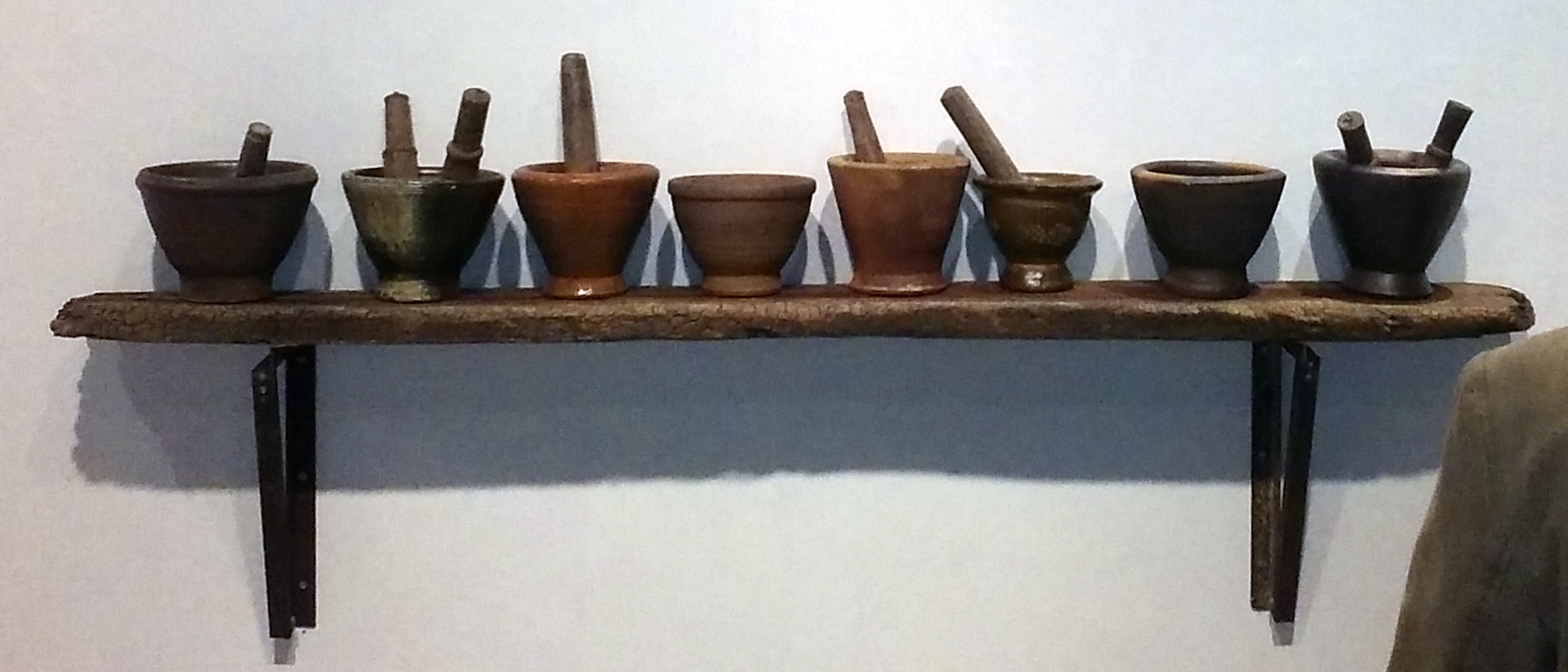
Dankwian mortars used to be able to be singled out by the narrow rim and the two incised lines under the rim. These lines in traditional pots were a place to wrap a cord or wire to hold a cracked pot together, but in my decades of visiting Thailand I have never seen them used this way. It is possible that they were during harder times before my first visit. It also seems likely that someone used them this way and I never saw it. It seems reasonable to conclude that the functionality of these lines was past by my first visit. As decorative ware production was ramped up in the early 1990’s mortar production faded. However, the mortar during that time continued to be used as an production object to train young potters. Once you have successfully made 1000 mortars you have the skills to move on to water jars. During this time Ubon mortars started to predominate sales even in Dankwian and Dankwian mortars disappeared from US sales.
Ubon mortars used to be able to be identified just by the thick roundish profiled rim. But Ubon clay appearance can also be used. It is especially apparent on the rim. The clay is the smoothest of the mortar making potteries using darker clay. Pakred clay can be quite smooth but its color is so different its hard to get confused. Ubon potters do put some attention into smooth forms and along with the clay’s properties can make for lushious (sp) surfaces. The pots are devoid of sharp details. In pots since the mid 1990s the salt surface sets them apart. Other than the by then defunct mortar potteries of Koh Kred, I have seen no salt like surfaces to confuse them with. I am told that there is some use of salt in Dankwian, and this does make some sense, the use in Dankwian that I have, or might have seen is light salt, just a light brown sheen in imitation of Phao Dam , traditional black fired ware. The newer Phao Dam seems to be achieved with help. Oddly today (2026-09-10) at the Asian Grocery in Corpus the mortars showed no clear sign of salt. They were punky (porous). They were wrapped in Chinese language newspaper although there was a crumbled Thai language newspaper in the pile. This could have been a Chinese language paper from Thailand, they could have been rewrapped, and they could be knockoffs. The clay looked right though. Ubon mortars used
I do not have enough examples to be sure that I can tell the difference between Tha Uten Nakon Phanom mortars and those of Phon Bok. However, how some contemporary mortars (2017) are made is apparent in the surface. These Tha Uten mortars are formed inisde a mold (hand jiggered) and the outside texture makes this apparent (others are thrown). Phon Bok mortars are at least in 2017 all thrown. This also is apparent. Both tend to have thicker rims with a sharp delineation of the rim on the outside, almost a square corner between the rim and the outside form. The rim extends on the outside of the wall. Ubon mortars lack this detail and the rim tends to extend on the inside (this prevents some splashing when working with wet ingredients. There are also no sharp corners on Ubon rims.
The clay in both Tha Uten and Phon Bok feels unlike a bentonitic silt. My assumption from this is that they are kaolitic,, but my experience with them is too weak to be really sure. Some earthenwares in use in the NE appear to be like Dankwian Clay, bentonitic silts, but all other clays feel more like Kaolitic clays. Feel is a poor way to do mineralogical analysis. The mortars from these two villages are fired more evenly and harder than the mortars from Dankwian and Ubon.
Let me start my usage portion of this text by just saying what is obvious outright, “If you want the best Som Tum then you must use a Dankwian mortar.
That said, there is a big differential in who buys what. Some of this is due to location of potteries, some has to do with price, and some of the decision is just distance. For the most part mortars only flow towards Bangkok. You won’t normally find Ubon mortars in Nong Khai, or Phon Bok ones in Ubon.
Near the mortar makers villages the only mortars you should expect to see are local ones. However, wages in Dankwian and less efficient production creates a situation where you are unlikely to see Dankwian mortars. Further, since about 2005 any mortars that you might seen in Dankwian that were made there might have been made with rims mimicing Ubon or Phon Bok. You would have to identify them by the clay. The Dankwian mortars are rarely can occasionally be found. They almost exculsively have Ubon rims and forms . Some that I saw on Facebook this year had bases that were much broader than either Ubon or older Dankwian mortars and looked like undetailed copies of old Pakred mortars. Chang Pratheep is supposed to send me some photos. Oustide the occasional mortars from Dankwian, mortars from Ubon, Phon Bok, and Nakorn Phanom are the only ones you will usually see. If you look hard enough you might find a few Dankwian mortars. I think that they are made by potters hard up for cash.
Even Back in 1989 when Dankwian mortars were still being made they were not the preferred mortars of professional som tum makers. They were just not durable enough. I believe that this is inherent in the bentonitic silt that they use for making pots. It appears to have less tensile strength than the bodies used in the other potteries. Back in 1989 the professionals in Bangkok used Pakred Mortars although those from Dankwian were available in places for purchase. Pakred mortars were more expensive, even with transportation costs. I wish that I had numbers for you, but I am relying only on memory. I might have it on my list of collection items I brought back. The clay, I think even when fired hot is just not as durable as Phon Bok or Pakred Clay.
But since the demise of the Pakred Mortar Kilns in the 1990’s the favored commercial som tum makers kroks were from Phon Bok. These days you do see some that appear to be from Nakon Phanom being used, especially the bigger sizes.
Although not pottery, I would be remiss if I did not discuss Ang Sila Stone mortars. After all I have entitled this part of my work, The Mortar Report, not the Clay Mortar Report, likely I should add Thai to the title.
Ang Sila mears “stone basin” and is a part of Chon Buri Province. Beyond the mortars they also carve figurative sculpture, animals, large basins, and wonderfully round spheres. I have not visited since 1989. Looking on Google-Earth I believe that the carving has moved indoors from out in the sun and weather. I have not located the area of production on a modern map.
The mortars are thick igneous rock that I am told is granite. The outsides were formed with hammer and chisel, and the insides were made with a combination of a diamond right angle grinder blade , hammer and chisel and finished with a masonary silicon carbide stone, also on an offset grinder. The outsides are coated in a clear lacquer type coat. I am unsure of its composition and I have not seen this being done.
The pestles for these mortars are also granite. When we were there they were being exclusively being carved by women. It should be clear that the process of using a mortar and pestle is a goo analogy for heterosexual intercourse, and the pestle representative of a penis. They let us take their pictures, but were embarassed. I took pictures before “getting it” and noting the exclusive gender carving them.
Stone mortars are generally not used for Som Tum and are generally used for mixes that do not contain liquids although exceptions are everywhere. They are great for hard dry spices, a use that the stoneware mortars are not great at. Kitchens in Thailand need both in order to be thought of as well equipped.
Basins in Ang sila can be quite large. We saw a pair that were about 2, maybe 3 meters across being carved. They took about a month’s work. It was amazing to watch someone removing 1/4 inch on the interior of one in order to refine the form. I will get size details closer when I attach a photo.
I was not particularly impressed by the quality of the figurative and animals carved when we were there. They were not very refined and tended to be in standard static poses. There was at least one person carving a dense sandstone however whose work was more dynamic detailed and refined. I wanted to go back and get video of just him working but was unable. Whole Gallery
Purchased the afternoon before our wedding in 1981
Purchased on the Isle of Kred, just north of Bangkok in 1989. Pestle is made of sugar palm. The apparent salt glaze is actually from volatilized alkali metal from the ash
The large rim and prominent wide base are typical of mortars from Koh Kred.
alkali metals and earth
The top blue square is glaze more dominated by alkali metals, the bottom yellow alkaline earths
This is the stacking on Koh Kred shot from the firebox
An Ordinary Danwian Mortar 1989
Back then you could be sure it was from Dankwian because of the "decorative" lines around the rim. I assume that the function is that they could be for placement of a wire after the rim cracks. I never saw one repaired that way.
An Extraordinary Mortar 1989
This mortar had more wood ash than any other mortar we saw in 1989. I paid an extra 2 baht for it.
Wood fired stoneware 1989
This mortar is from before the introduction of salt. This side has a coating of not fully melted woodash on it. The round rim was a clear sign of where it was from.
The round Ubon rim is easily seen. This is a salt glazed pot from the mid to late 1990s. It was purchased in South Texas USA Baan Tha Tao Hai บ้านท่าเตาไห
Baan Tha Tao Hai บ้านท่าเตาไห
From before the introduction of soda. The brown coating is from the volitalization of alkali metals in the fuel.
showing the rim
View of the rim. You can see the stacking marks where two mortars were stacked on top blocking out the volitalized alkali metals.
Salt glazed mortar from the 1990's. You can tell that the firing temperature was low from the orange color of the clay and lack or orange peel texture. Baan Tha Tao Hai บ้านท่าเตาไห Ubon
Baan Tha Tao Hai บ้านท่าเตาไห Ubon
This mortar was formed over a spinning mold. The symmetrical sponge marks are the easy way to differentiate these from Phon Bok mortars. The clay is similar although tends to be fired a bit lower I think. The rims are similar