The Footnotes, my favorite part.
1)Living with a rip roaring case of ADHD does not lead to what could be considered an ideal headspace to write an organized book. I have so many outlines and have filled in so little of what is needed. Consequently I am going to try and put together a collection of essays about Clay, about Thailand and particularly about Thai Ceramics. Necessarily it will talk about how I think, how I come up with ideas, and maybe philosophy. What I am not going to do ahead of time is worry too much about cohesion. The cohesive element is unfortunately me. I hope it will paint a picture without too much talk of the parts. But some will be necessary.
2) Challenges. There are a few big ones that have run through my life. They have taken more than a little bite out of my productivity. They also have limited “follow through”. On the other side of this, they keep my brain mixing and matching, not just learning new things but finding ways to integrate divergent areas of inquiry. I have mentioned the ADHD. I think it is very common in the visual arts, and maybe particularly in Ceramics. Part of this has to be the nature of the material. It overcomes the abstraction of representation. It is, its concrete. That it also can be concrete, a common ceramic material is just a meaningless confusion. If you squeeze a piece of clay then it already is something unique. It already has presence. When first you put paint on a canvas it is always just what it is, a just started painting. Clay is not representation but the direct action of presentation. That prefix, “re” is not there. Clay is.
I am not about to deny that you can be a great ceramist without mixing clay or glazes or even firing kilns. It certainly is true that you can. But the diversity of tasks and their widely differing needed skills keeps the ADHD brain engaged. Mixing clay is physical. And if you don’t mix, wedging or even running clay through a deairing mill is physical. Unless you make small work, at least to some extent this sort of activity can keep your upper body strong. If you regularly throw large work, then change this to “Very strong indeed”. And this can be before even getting started throwing.
Throwing pottery is an athletic vocation. You need to train muscle groups, large and small, to operate without much in the moment guidance. Keeping a pot centered, once you have basic skill on the wheel runs on autopilot. It runs on training. It involves mostly large muscle groups but relies on tactile feedback and some control of small muscle groups. Where the author Malcolm Gladwell talks about the 10,000 hour rule, we operate under the 10,000 pot rule. Although is some potteries this is better stated as the 10,000 gallon rule.
Then there is dealing with the surface. There are enough different ways to do this as there are people in the field. David Peter’s, potters in some traditional pottery villages in Japan, Mike Martino do this in a way that seems minimal. They choose a clay and type of firing so that the clay does some of the work. It never does all the work. How you finish a surface, how you fire, how you process or select the clay, these are decisions about surface. Star Pottery works is a source for options, mixing clay in small lots with minimal processing, leaving its inherent nature.
Some people take a much more maximalist approach in terms of surface. Linda Arbuckle comes to mind, as does Rosalie Wynkoop. But even in these, these people love the materials they work with, how they look, the texture, the color and even how they are applied. Just as you can buy your materials you can ignore surface, few do.
Firing. Even the people that just punch a button have to make decisions on firing. Did this firing look better than the last? is it a bit hotter? Did that soak (holding the peak temperature constant for a length of time) help the way the ware looks? Its, for most, an important part of the process and completely unlike throwing or handbuilding.
Then there is sales, promotion, packing and shipping. One friend did buyer’s markets and then shipped from his factory where he employed some workers. Some do crafts fairs. Some manage to sell from their studios. Some make copious amounts of inexpensive work. Others make a few expensive pieces that require a lot of time in the studio. But regardless, this is a very different task from the other ones.
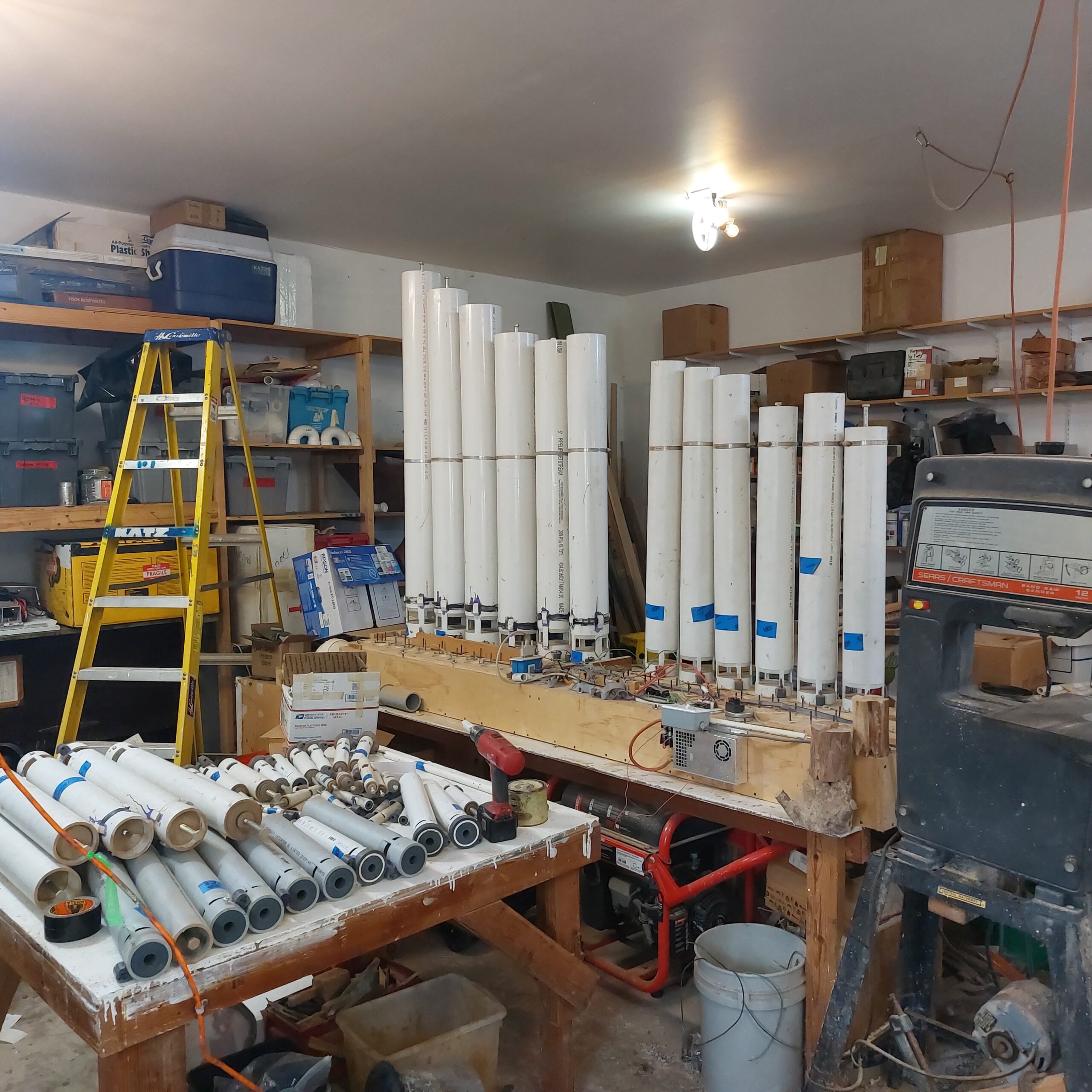
Building, altering, repairing equipment is a part of the studio practice of many people with ADHD. For some its a chore. But if you ADHD it is yet another task, more variety. If you have ADHD such variety is a blessing.
3) I think it is the directness, the lack of abstraction that is painting, the physicality, that draws the dyslexic to the medium. I do not know that it is true, but we people clay seem to have a lot of learning disabilities among us. I am dysgraphic. People always wonder how this is compatible with a medium that asks for details. But I manage. I gave up on neatness a long time ago. The trick is to make how you make things look intentional ( see chapter 7 b “Intendedness”)